

Business automation is no longer a futuristic concept reserved for large corporations. Today, organizations of every size are embracing automation technologies to streamline operations, reduce costs, improve customer experiences, and increase productivity. From artificial intelligence (AI) and robotic process automation (RPA) to smart workflow software and machine learning, automation has become one of the most influential drivers of business transformation.
Companies that successfully integrate automation into their daily operations gain a significant competitive advantage. Employees spend less time performing repetitive tasks and more time focusing on innovation, strategy, and customer relationships. Meanwhile, customers enjoy faster service, greater accuracy, and more personalized experiences.
In this comprehensive guide, we’ll explore how automation is transforming business, why it matters, the technologies behind it, real-world examples, future trends, and how organizations can prepare for the automated future.
Why Business Automation Is Growing So Quickly
The rapid rise of automation is fueled by several factors:
- Advances in artificial intelligence
- Affordable cloud computing
- Increased demand for efficiency
- Labor shortages in many industries
- Growing customer expectations
- Digital transformation initiatives
Businesses today face constant pressure to deliver better products faster while reducing operational costs. Automation provides a practical solution by eliminating repetitive work and improving consistency.
According to industry research, companies implementing automation often experience improvements in operational efficiency, fewer human errors, and higher employee satisfaction because staff members can focus on more meaningful work instead of repetitive administrative tasks.
What Is Business Automation?
Business automation refers to using technology to perform tasks with minimal human intervention.
These tasks may include:
- Data entry
- Invoice processing
- Customer support
- Email marketing
- Inventory management
- Payroll processing
- Appointment scheduling
- Document approvals
- Financial reporting
Modern automation combines software, AI, analytics, cloud computing, and machine learning to create intelligent systems capable of making decisions based on predefined rules or learned patterns.
Unlike traditional software, modern automation can adapt, analyze data, and continuously improve performance.
The Evolution of Business Automation
Early Automation
Decades ago, automation primarily involved manufacturing robots assembling products on factory floors.
Although revolutionary at the time, these systems were limited to repetitive physical tasks.
Software Automation
As computers became more powerful, businesses began automating administrative work such as accounting, payroll, and customer databases.
This reduced paperwork and improved organizational efficiency.
Intelligent Automation
Today’s automation goes much further.
Artificial intelligence enables software to:
- Understand documents
- Interpret customer requests
- Predict future demand
- Detect fraud
- Recommend business decisions
- Analyze customer behavior
This combination of automation and AI is often called Intelligent Automation (IA).
Major Technologies Driving Business Automation
Artificial Intelligence (AI)
Artificial intelligence allows systems to simulate human intelligence.
AI powers:
- Virtual assistants
- Customer service chatbots
- Predictive analytics
- Recommendation engines
- Fraud detection
- Image recognition
Instead of simply following rules, AI learns from data and improves over time.
Robotic Process Automation (RPA)
RPA uses software robots to complete repetitive computer-based tasks.
Examples include:
- Copying information between systems
- Processing invoices
- Updating customer records
- Managing spreadsheets
RPA is especially useful for tasks that are repetitive, rule-based, and time-consuming.
Machine Learning
Machine learning enables software to identify patterns without explicit programming.
Businesses use machine learning for:
- Sales forecasting
- Demand prediction
- Inventory optimization
- Marketing personalization
- Customer segmentation
The more data these systems process, the smarter they become.
Workflow Automation
Workflow automation connects different applications and departments.
Instead of manually forwarding emails or updating multiple systems, automated workflows ensure information moves instantly across an organization.
Popular workflow examples include:
- Employee onboarding
- Contract approvals
- Expense reimbursement
- Purchase requests
Cloud Computing
Cloud technology has dramatically accelerated automation adoption.
Instead of investing in expensive infrastructure, businesses can access automation platforms through cloud services, making advanced tools affordable even for startups and small businesses.
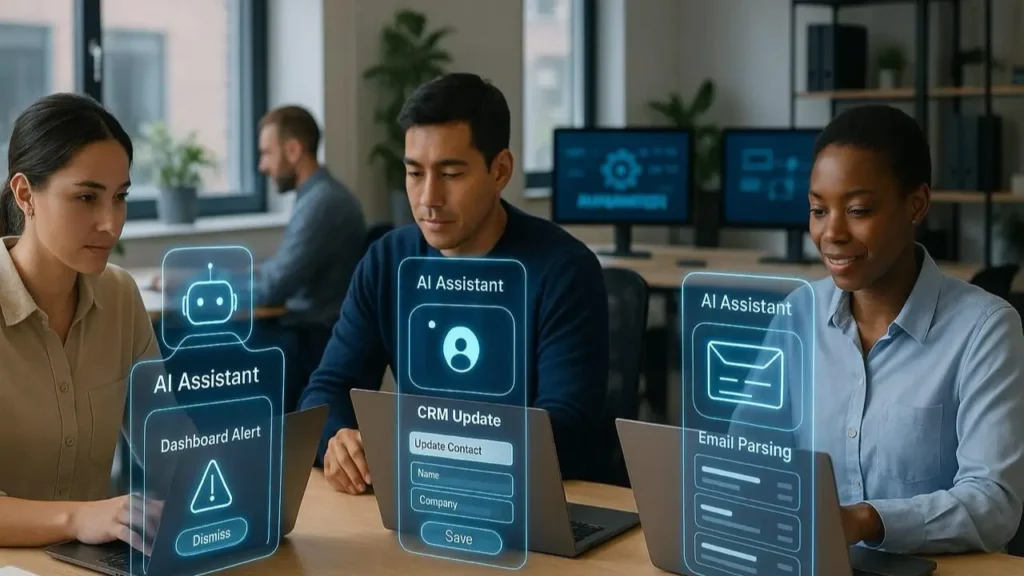
How Automation Improves Business Productivity
One of the biggest advantages of automation is increased productivity.
Instead of spending hours on repetitive work, employees can focus on:
- Strategic planning
- Innovation
- Customer relationships
- Creative problem-solving
- Business growth
For example, an automated invoice system can process hundreds of invoices in minutes instead of requiring several employees to spend days entering data manually.
This saves time while reducing costly mistakes.
Reducing Human Error
Even experienced employees make mistakes.
Manual data entry may result in:
- Incorrect invoices
- Duplicate records
- Missing customer information
- Accounting errors
Automation performs repetitive tasks consistently, dramatically reducing errors.
This improves data quality and helps businesses maintain regulatory compliance.
Improving Customer Service
Customer expectations have changed dramatically.
People expect:
- Instant responses
- Personalized experiences
- 24/7 availability
- Fast issue resolution
Automation makes this possible.
AI Chatbots
Modern AI chatbots answer frequently asked questions immediately.
They can:
- Track orders
- Reset passwords
- Schedule appointments
- Process returns
- Recommend products
Human agents then focus on complex issues requiring empathy and critical thinking.
Personalized Marketing
Automation platforms analyze customer behavior and automatically send:
- Product recommendations
- Abandoned cart reminders
- Birthday offers
- Loyalty rewards
- Personalized newsletters
This improves engagement while increasing sales.
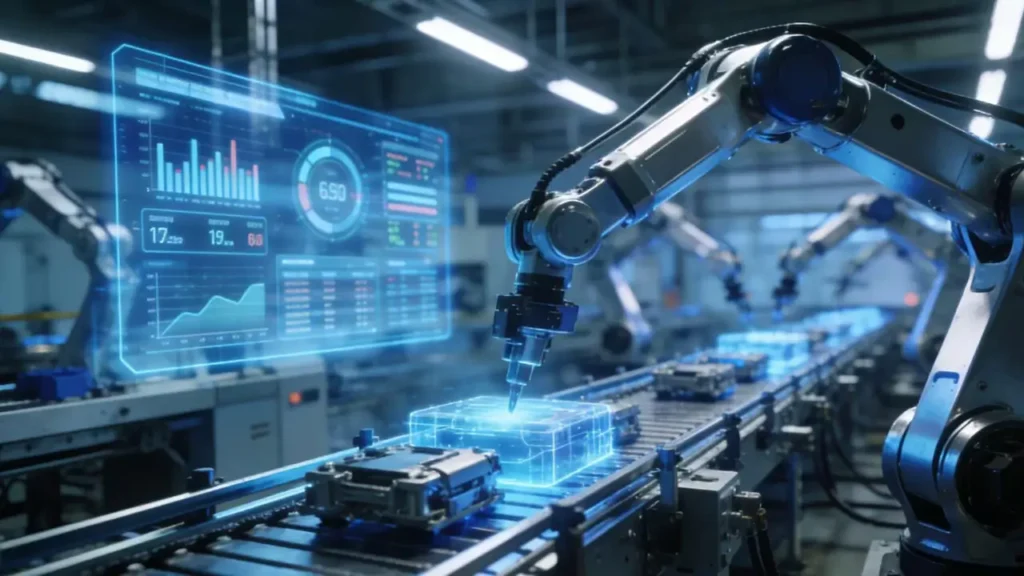
Automation in Manufacturing
Manufacturing remains one of automation’s biggest success stories.
Smart factories now use:
- Industrial robots
- Predictive maintenance
- Computer vision
- IoT sensors
- Automated quality inspections
These technologies reduce downtime, improve product quality, and increase production capacity.
Factories can now monitor equipment in real time and detect problems before machines fail.
Automation in Healthcare
Healthcare organizations use automation to improve patient care while reducing administrative burdens.
Examples include:
- Electronic medical records
- Appointment scheduling
- Medical billing
- AI-assisted diagnostics
- Prescription management
Doctors spend less time on paperwork and more time caring for patients.
Automation in Retail
Retail businesses increasingly rely on automation.
Applications include:
- Inventory tracking
- Self-checkout systems
- Warehouse robotics
- Dynamic pricing
- Customer analytics
Online retailers use AI to recommend products based on shopping history, increasing conversion rates and customer satisfaction.
Automation in Finance
Banks and financial institutions automate many processes, including:
- Fraud detection
- Loan processing
- Risk assessment
- Compliance monitoring
- Customer verification
AI continuously monitors transactions and flags suspicious activity within seconds.
Automation in Human Resources
HR departments benefit significantly from automation.
Tasks commonly automated include:
- Resume screening
- Interview scheduling
- Payroll
- Employee onboarding
- Benefits administration
- Performance tracking
This allows HR professionals to focus more on employee development and organizational culture.
Supply Chain Automation
Global supply chains have become increasingly complex.
Automation improves:
- Inventory forecasting
- Shipment tracking
- Warehouse management
- Vendor communication
- Demand planning
Real-time visibility enables businesses to respond quickly to disruptions and changing market conditions.

Small Businesses Are Benefiting Too
Automation is no longer limited to large enterprises.
Small businesses can automate:
- Appointment booking
- Social media scheduling
- Email marketing
- Customer support
- Accounting
- Lead generation
Affordable cloud-based solutions have made automation accessible to businesses with limited budgets.
Even a small company can now operate with the efficiency of a much larger organization.
The Role of AI in Modern Automation
Artificial intelligence has taken automation beyond repetitive tasks.
AI can now:
- Interpret customer emotions
- Analyze contracts
- Generate reports
- Translate languages
- Predict maintenance needs
- Write marketing content
- Detect cybersecurity threats
This creates opportunities for businesses to become more proactive rather than reactive.
Challenges of Business Automation
Despite its many advantages, automation also presents challenges.
Initial Investment
Implementing automation requires:
- Software
- Employee training
- Integration
- Process redesign
Although costs often decrease over time, the initial investment may be significant.
Employee Concerns
Workers sometimes fear automation will replace jobs.
In reality, automation usually changes job responsibilities rather than eliminating them entirely.
Employees increasingly focus on:
- Creativity
- Leadership
- Decision-making
- Customer interaction
- Innovation
These uniquely human skills remain highly valuable.
Cybersecurity Risks
Connected systems require strong cybersecurity.
Businesses must protect:
- Customer data
- Financial information
- Intellectual property
- Automated workflows
Security should be integrated into every automation initiative.
Best Practices for Implementing Automation
Successful automation projects usually follow these steps.
Identify Repetitive Processes
Start by finding tasks that:
- Consume excessive time
- Follow consistent rules
- Generate frequent errors
- Require little creativity
These are ideal candidates for automation.
Set Clear Goals
Define measurable objectives such as:
- Reduce costs
- Improve productivity
- Increase customer satisfaction
- Shorten response times
- Improve accuracy
Clear goals make success easier to measure.
Train Employees
Automation works best when employees understand the technology.
Training reduces resistance while helping staff embrace new tools.
Successful organizations treat automation as collaboration between humans and technology.
Continuously Improve
Automation is not a one-time project.
Businesses should regularly monitor:
- Performance
- Accuracy
- Customer feedback
- Employee adoption
- Return on investment (ROI)
Continuous improvement ensures long-term success.
Future Trends in Business Automation
Automation continues evolving rapidly.
Some of the most exciting developments include:
Hyperautomation
Combining AI, RPA, analytics, and machine learning into fully integrated business ecosystems.
Autonomous Decision-Making
AI systems will increasingly make routine operational decisions without human intervention while escalating only exceptional cases.
Digital Twins
Companies will create virtual models of factories, supply chains, and entire organizations to simulate changes before implementing them in the real world.
Intelligent Collaboration
Rather than replacing employees, automation will become a digital coworker that assists humans in daily decision-making.
Voice-Based Business Automation
Voice assistants will increasingly manage scheduling, reporting, inventory, and operational tasks using natural language.
Frequently Asked Questions About How Automation Is Transforming Business
Does automation eliminate jobs?
Automation changes many jobs by removing repetitive tasks, but it also creates new opportunities in technology, data analysis, cybersecurity, AI management, and digital operations. Companies often retrain employees for higher-value roles.
Is automation only for large companies?
No. Cloud-based automation platforms have made advanced tools affordable for startups, freelancers, and small businesses.
What industries benefit the most?
Nearly every industry benefits, including manufacturing, healthcare, retail, finance, logistics, education, hospitality, and professional services.
Is artificial intelligence the same as automation?
Not exactly. Automation follows predefined rules to complete tasks, while AI can learn from data, recognize patterns, and make intelligent decisions. Together, they create intelligent automation.
How long does automation implementation take?
Simple workflows may be automated within days or weeks, while enterprise-wide automation projects can take several months depending on their complexity.
Conclusion
Understanding how automation is transforming business is essential for organizations that want to remain competitive in today’s digital economy. Automation is no longer just about reducing costs—it is about empowering employees, improving customer experiences, increasing operational efficiency, and enabling smarter decision-making through artificial intelligence and data-driven insights.
From robotic process automation and cloud-based workflows to AI-powered analytics and predictive decision-making, automation is reshaping virtually every industry. Businesses that embrace these technologies thoughtfully are better equipped to innovate, adapt to changing market conditions, and deliver greater value to their customers.
The future belongs to organizations that view automation not as a replacement for people, but as a powerful partner that enhances human capabilities. By investing in the right tools, training employees, and continuously refining automated processes, companies of all sizes can unlock sustainable growth and long-term success.
As automation technology continues to evolve, one thing is clear: businesses that adopt intelligent automation today will be better prepared to lead tomorrow’s increasingly digital and competitive marketplace.
Interested in discovering how artificial intelligence is transforming the world? Check out our latest articles on /https://growthpoweredai.com/2026/07/11/no-code-automation-platforms-2026/