The 2026 FIFA World Cup will be unlike any tournament ever held. Hosted jointly by the United States, Canada, and Mexico, it will be the largest World Cup in history, featuring 48 national teams, 104 matches, and millions of fans from around the globe.
While the world’s attention will naturally focus on the players and unforgettable moments on the field, another revolution is quietly taking place behind the scenes: the rise of smart stadiums.
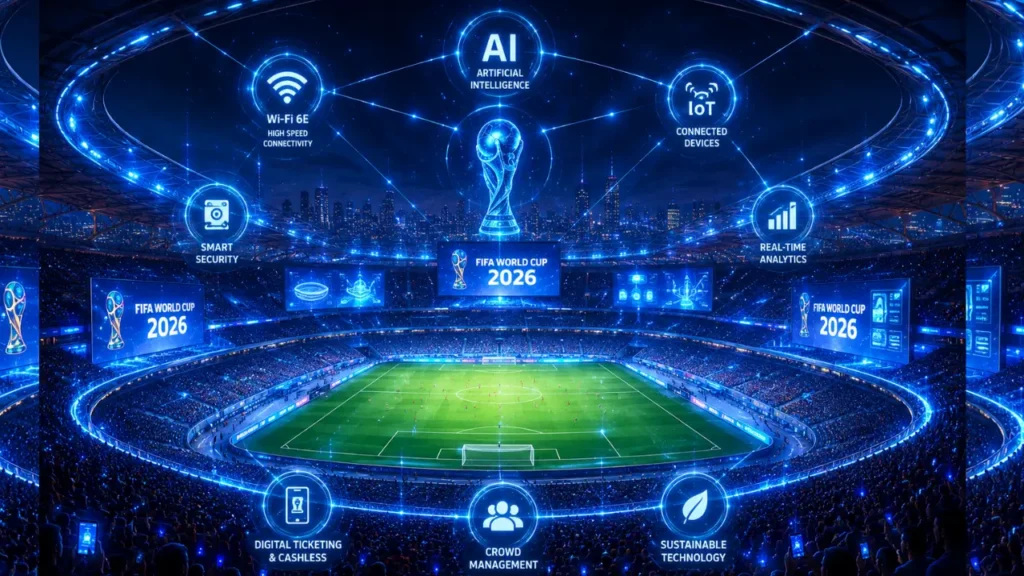
Today’s stadiums are no longer simply massive structures filled with seats. They have evolved into intelligent ecosystems powered by Artificial Intelligence (AI), the Internet of Things (IoT), cloud computing, 5G connectivity, advanced cybersecurity, biometric technology, and real-time analytics.
These innovations aim to improve every aspect of the match-day experience—from purchasing tickets and finding your seat to ordering food without waiting in line and leaving the venue more efficiently after the final whistle.
In this guide, you’ll discover how Smart Stadiums for the 2026 FIFA World Cup are reshaping the future of sports and why these technologies could become the global standard for major sporting events.
What Is a Smart Stadium?
A smart stadium is a sports venue equipped with interconnected digital technologies that continuously collect, analyze, and respond to data in real time.
Rather than relying solely on human operations, smart stadiums use thousands of sensors, cameras, wireless devices, and AI-powered software to optimize:
- Security
- Crowd management
- Fan engagement
- Food and beverage services
- Transportation
- Energy consumption
- Stadium maintenance
- Emergency response
Think of a smart stadium as a “smart city” compressed into one building.
Every connected device contributes data that allows operators to make faster and better decisions while creating a safer and more enjoyable experience for visitors.
Why the 2026 FIFA World Cup Is the Perfect Stage for Smart Stadium Technology
The 2026 tournament presents unique logistical challenges.
The competition will feature:
- 16 host cities
- Three countries
- Hundreds of thousands of international travelers
- Millions of stadium visitors
- Billions of television viewers
Managing crowds of this magnitude requires technology that simply wasn’t available during previous World Cups.
Smart stadiums help organizers by providing:
- Real-time crowd analytics
- Instant communication systems
- Predictive maintenance
- AI-assisted security
- Intelligent transportation coordination
- Digital ticket verification
- High-speed wireless connectivity
Without these innovations, organizing an event of this scale would be far more difficult.
1. Artificial Intelligence Will Manage Stadium Operations
Artificial Intelligence is becoming the digital brain of modern stadiums.
Instead of relying solely on manual decisions, AI constantly analyzes millions of data points to optimize stadium operations.
Examples include:
Predicting Crowd Movement
AI can detect where congestion is likely to occur before it becomes a problem.
If one entrance becomes crowded, security personnel can redirect visitors toward less crowded gates.
Food Demand Prediction
AI analyzes purchasing trends to predict:
- Which concession stands will become busy
- Which foods will sell out first
- When additional staff are needed
This helps reduce long lines and improve customer satisfaction.
Equipment Monitoring
AI continuously monitors systems such as:
- Air conditioning
- Escalators
- Elevators
- Electrical systems
- Lighting
- Water systems
Potential failures can often be detected before they occur.
2. IoT Sensors Will Connect Every Corner of the Stadium
The Internet of Things (IoT) refers to thousands of connected devices communicating in real time.
Modern World Cup stadiums may contain tens of thousands of IoT sensors monitoring:
- Temperature
- Air quality
- Humidity
- Occupancy
- Structural vibration
- Water usage
- Electricity consumption
- Restroom occupancy
- Parking availability
This constant flow of information allows stadium operators to make rapid decisions that improve efficiency.
For fans, many of these technologies work invisibly, making the experience smoother without them even realizing it.
3. 5G Networks Will Power Ultra-Fast Connectivity
One of the biggest frustrations during major sporting events has traditionally been poor mobile service.
Thousands of people trying to upload photos simultaneously often overload cellular networks.
The 2026 FIFA World Cup is expected to rely heavily on 5G infrastructure, delivering:
- Faster downloads
- Lower latency
- Better streaming quality
- More reliable video calls
- Instant social media uploads
Fans will likely enjoy:
- Multiple live camera angles
- Instant replays
- Interactive statistics
- Augmented reality experiences
- Real-time translations
- Mobile food ordering
High-speed connectivity also supports thousands of connected devices operating throughout the stadium.
4. Digital Ticketing and Contactless Entry
Paper tickets are rapidly disappearing.
Smart stadiums increasingly rely on:
- Mobile tickets
- QR codes
- NFC technology
- Digital wallets
Benefits include:
- Faster entry
- Reduced fraud
- Better security
- Easier ticket transfers
- Real-time attendance tracking
Some venues are also exploring biometric verification to further streamline access.
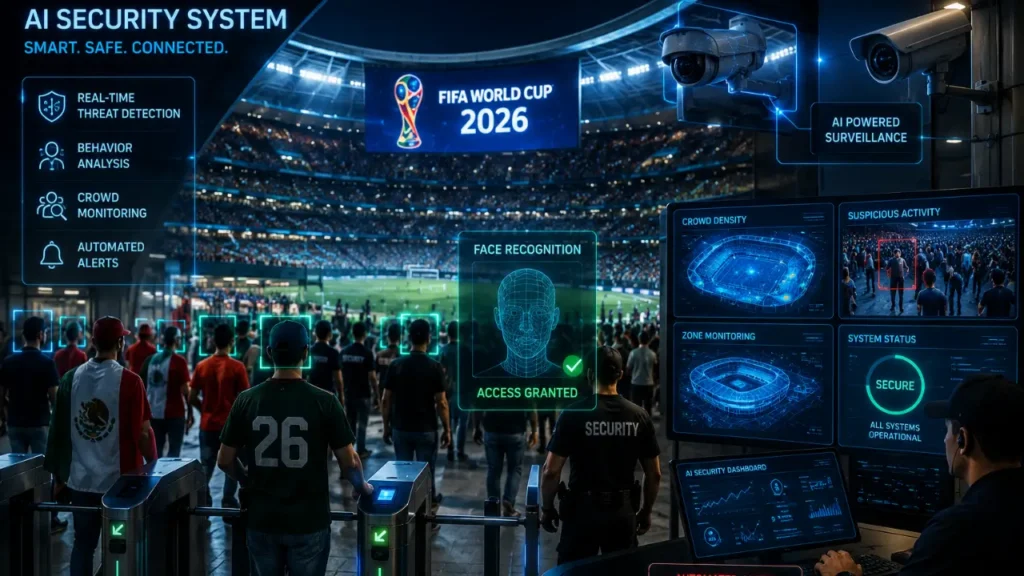
5. AI-Powered Security Systems
Security remains one of the highest priorities during international sporting events.
Modern surveillance systems no longer rely solely on human monitoring.
AI-powered cameras can detect:
- Suspicious objects
- Unauthorized access
- Restricted-area violations
- Unusual crowd behavior
- Emergency situations
Rather than replacing security personnel, AI acts as an intelligent assistant capable of analyzing thousands of video feeds simultaneously.
This enables faster responses while reducing the likelihood of human error.

6. Cashless Stadium Experiences
Many stadiums around the world have already transitioned toward cashless operations.
The 2026 FIFA World Cup is expected to continue this trend.
Fans may purchase food, beverages, and merchandise using:
- Credit cards
- Mobile wallets
- Smart watches
- Contactless payment systems
Advantages include:
- Faster transactions
- Shorter concession lines
- Better inventory tracking
- Improved financial security
- Reduced cash handling
For international visitors, digital payments also simplify currency exchange concerns.
7. Smart Parking and Intelligent Transportation
Finding parking has long been one of the biggest frustrations for fans attending major sporting events.
Smart parking systems use sensors and AI to:
- Identify available spaces
- Guide drivers using mobile apps
- Predict parking demand
- Optimize traffic flow
- Reduce congestion
Integrated transportation platforms may also coordinate:
- Public transit
- Shuttle buses
- Ride-sharing services
- Electric vehicle charging stations
The goal is to reduce travel time before and after each match.
8. Sustainability Will Be Built Into Every Smart Stadium
Environmental responsibility has become a major focus in stadium design.
Many venues hosting the 2026 FIFA World Cup are implementing technologies that reduce environmental impact.
Examples include:
Smart Energy Systems
AI optimizes electricity usage by adjusting lighting and climate control according to occupancy.
LED Lighting
Modern LED systems consume significantly less electricity than traditional lighting.
Water Conservation
Smart irrigation systems reduce water waste by monitoring soil moisture and weather conditions.
Solar Power
Some venues generate renewable electricity through rooftop solar panels.
Waste Management
IoT-enabled trash bins notify maintenance teams when they need to be emptied, improving cleanliness while reducing unnecessary collection trips.
9. Personalized Fan Experiences Through Mobile Apps
Smart stadium apps are becoming digital companions for every visitor.
Instead of serving only as digital tickets, they may offer:
- Interactive maps
- Seat navigation
- Food ordering
- Merchandise purchases
- Live statistics
- Match highlights
- Parking directions
- Emergency alerts
- Personalized promotions
Artificial Intelligence can even recommend food or merchandise based on previous purchases.
This personalization creates a more engaging and enjoyable experience for fans.
10. Augmented Reality and Immersive Experiences
Augmented Reality (AR) is expected to play an increasingly important role in future sporting events.
Using smartphones or AR glasses, fans may be able to:
- View player statistics instantly
- Watch tactical overlays
- Access multilingual information
- Explore interactive stadium tours
- Participate in digital games
These experiences blend physical and digital environments, creating a more immersive match-day atmosphere.
11. Predictive Maintenance Keeps Stadiums Running
One of the least visible but most valuable innovations is predictive maintenance.
Instead of repairing equipment only after it breaks, AI predicts failures before they happen.
Sensors monitor:
- Escalators
- Elevators
- Air conditioning
- Plumbing
- Electrical systems
- Scoreboards
- Wi-Fi infrastructure
Maintenance teams receive alerts whenever unusual patterns appear.
This minimizes downtime and improves safety throughout the tournament.
Cybersecurity Will Be More Important Than Ever
As stadiums become increasingly connected, cybersecurity becomes critical.
Modern smart stadiums manage enormous amounts of digital information, including:
- Ticketing data
- Payment systems
- Wi-Fi networks
- Mobile applications
- Security cameras
- Operational controls
Cybersecurity teams work continuously to protect these systems against threats such as ransomware, phishing attempts, distributed denial-of-service (DDoS) attacks, and unauthorized access.
Protecting fan data is just as important as protecting the physical venue.
How Smart Stadiums Improve Accessibility
Technology is also making sporting events more inclusive.
Smart stadium features may include:
- Real-time captioning
- Indoor navigation for visually impaired visitors
- Hearing assistance systems
- Wheelchair-friendly digital routing
- Voice-controlled mobile applications
- Multilingual translation tools
These innovations help ensure that fans of all abilities can enjoy the World Cup experience.
Behind the Scenes: The Hidden Technology Fans Never See
Much of what makes a smart stadium successful happens behind closed doors.
Hidden systems include:
- Cloud computing platforms
- AI analytics engines
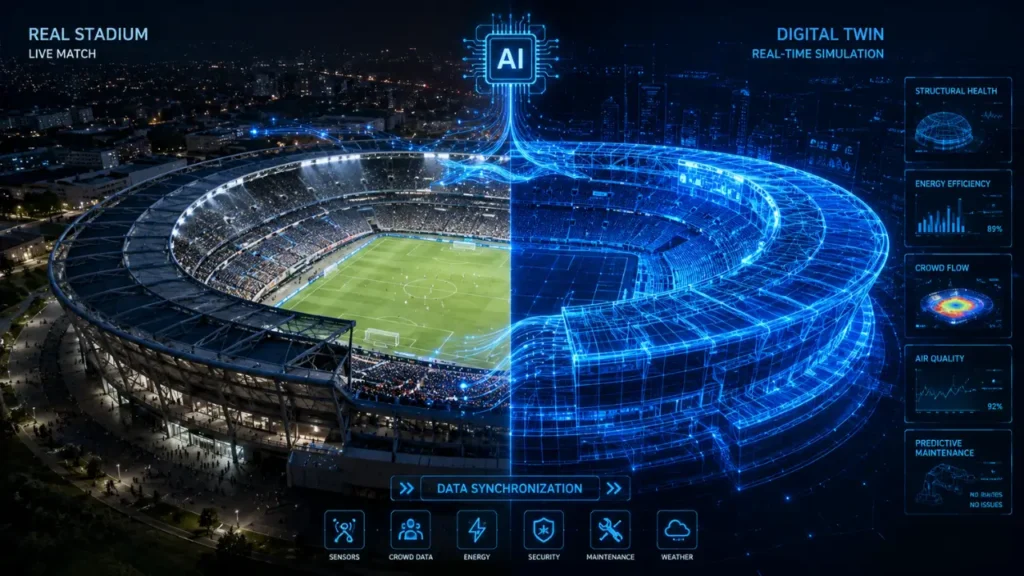
- Digital twins for facility management
- Environmental monitoring systems
- Automated emergency response coordination
- Intelligent backup power systems
Although invisible to spectators, these technologies play a vital role in ensuring every match runs smoothly.
Benefits of Smart Stadiums
The advantages extend far beyond convenience.
For Fans
- Faster entry
- Better Wi-Fi
- Shorter concession lines
- Safer environment
- Personalized experiences
- Easier navigation
For Stadium Operators
- Lower operating costs
- Better energy efficiency
- Predictive maintenance
- Improved security
- Real-time analytics
- Better resource allocation
For Cities
- Improved transportation
- Reduced congestion
- Lower environmental impact
- Increased tourism appeal
- Stronger digital infrastructure
Challenges Facing Smart Stadiums
Despite their many benefits, smart stadiums also present challenges.
Privacy
Some technologies collect large amounts of visitor data, raising questions about privacy and responsible data handling.
Cybersecurity
Connected systems require constant protection against cyber threats.
High Costs
Installing AI, IoT, and 5G infrastructure involves significant investment.
Technology Integration
Combining thousands of devices from different manufacturers into one reliable system is a complex engineering task.
Reliability
Critical systems must continue operating even during network outages or unexpected technical failures.
The Future Beyond the 2026 FIFA World Cup
The technologies introduced during the 2026 FIFA World Cup are unlikely to disappear after the tournament.
Instead, they will continue influencing:
- Olympic Games
- NFL stadiums
- NBA arenas
- Concert venues
- International expos
- Airports
- Smart cities
Many innovations tested during the World Cup could eventually become standard features in sports venues worldwide.
Frequently Asked Questions (FAQ)
What is a smart stadium?
A smart stadium is a sports venue that uses technologies such as Artificial Intelligence, IoT sensors, cloud computing, and 5G networks to improve security, operations, sustainability, and the fan experience.
Will all 2026 World Cup stadiums be smart stadiums?
Many host venues already include advanced digital technologies, while others are being upgraded to support the demands of the tournament. The level of smart technology may vary by stadium.
How does AI improve stadium security?
AI analyzes video feeds and sensor data in real time to help identify unusual situations, monitor crowd movement, and assist security teams in responding more quickly to potential incidents.
Why is 5G important for the World Cup?
5G enables faster mobile connectivity, supporting live streaming, interactive features, digital ticketing, real-time navigation, and thousands of connected devices inside the stadium.
Are smart stadiums environmentally friendly?
Many smart stadiums incorporate sustainable technologies such as LED lighting, energy management systems, water conservation, renewable energy sources, and intelligent waste management.
Final Thoughts
The Smart Stadiums for the 2026 FIFA World Cup represent far more than upgraded sports venues—they are a glimpse into the future of live entertainment. By combining Artificial Intelligence, IoT, 5G, cloud computing, smart security, cashless payments, predictive maintenance, and sustainable infrastructure, these stadiums will deliver a safer, faster, and more immersive experience for millions of fans.
As technology continues to evolve, the innovations showcased during the tournament are likely to influence how stadiums, arenas, and large public venues are designed for decades to come. The 2026 FIFA World Cup will not only crown a world champion but also demonstrate how digital transformation can redefine the way people experience sports.
If you enjoyed this article, explore our other content on Artificial Intelligence, Future Technology Trends, Gadgets, and Automation Tools to stay ahead of the latest innovations shaping tomorrow https://growthpoweredai.com/2026/07/13/flying-cars-future-or-reality/
Emily Carter
Technology Editor at GrowthPoweredAI
Emily Carter is a technology writer specializing in artificial intelligence, automation, future technology trends, and digital innovation. She researches the latest AI tools, emerging technologies, and business automation strategies to help readers understand how technology is shaping the future. Through in-depth research and practical insights, Emily creates informative content designed for entrepreneurs, professionals, and technology enthusiasts. Read more articles by Emily on GrowthPoweredAI.