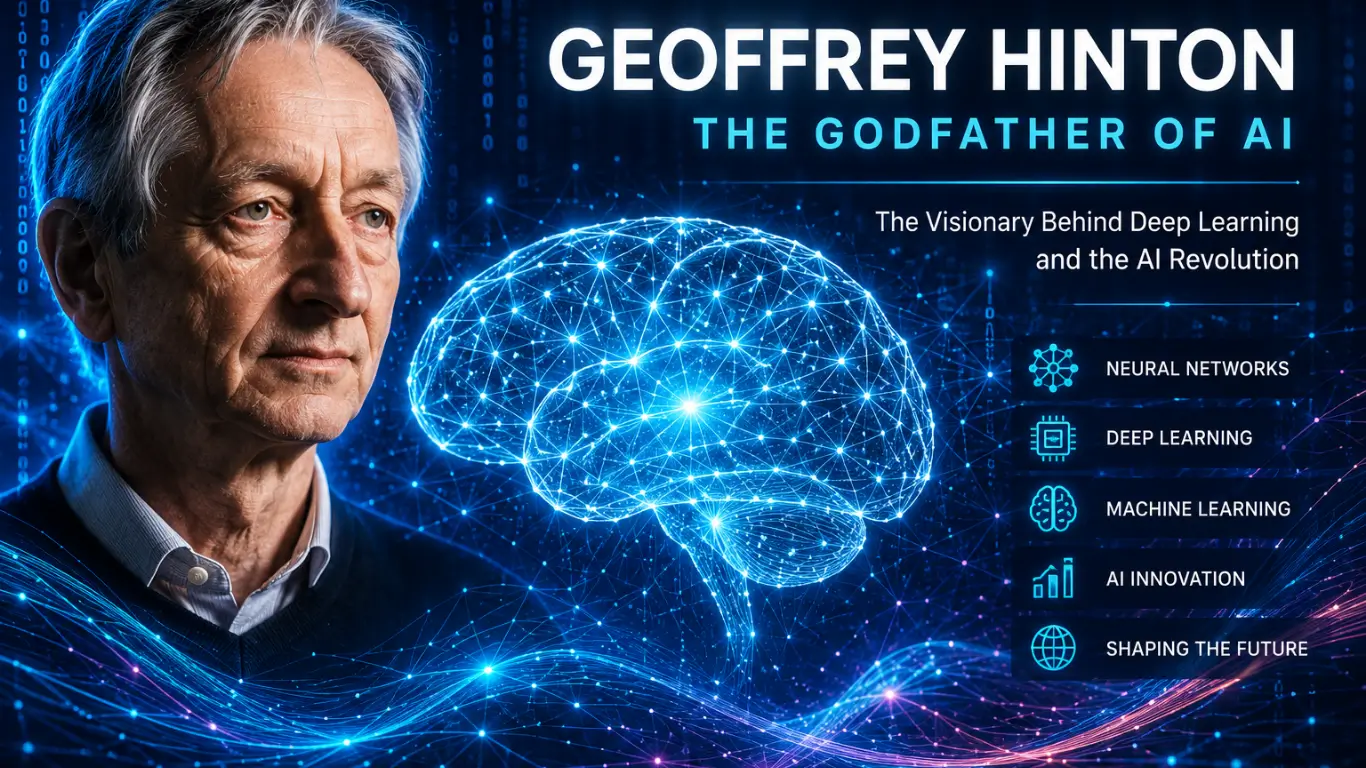
Few individuals have had a greater impact on the development of artificial intelligence than Geoffrey Hinton. Often referred to as the “Godfather of AI,” Hinton’s groundbreaking research laid the foundation for many of the technologies that power today’s AI revolution. From voice assistants and recommendation systems to self-driving cars and advanced generative AI tools, countless innovations can trace their origins back to the concepts and neural network architectures that Hinton helped develop.
Over the past several decades, artificial intelligence has transformed from a niche academic field into one of the most influential technologies of the modern era. While many scientists contributed to this transformation, Geoffrey Hinton stands out as one of the most important pioneers. His work on artificial neural networks, deep learning, and machine learning helped overcome major obstacles that once limited AI’s capabilities.
Today, AI is reshaping industries, economies, and everyday life. Businesses use AI to automate workflows, improve decision-making, and personalize customer experiences. Healthcare organizations leverage AI to assist with diagnoses and medical research. Educational institutions are exploring AI-powered learning tools. Meanwhile, governments and technology leaders are debating the ethical implications and long-term consequences of increasingly powerful AI systems.
As the world enters a new era of intelligent machines, understanding Geoffrey Hinton’s contributions offers valuable insight into where artificial intelligence came from and where it may be headed next.
Who Is Geoffrey Hinton?
Geoffrey Hinton is a British-Canadian cognitive psychologist and computer scientist widely recognized for his pioneering work in artificial intelligence and deep learning. Born in London, England, in 1947, Hinton developed an early interest in understanding how the human brain processes information.
He studied experimental psychology at the University of Cambridge before pursuing graduate studies in artificial intelligence. Throughout his academic career, Hinton focused on a fundamental question: Could computers learn in a way that resembles how the human brain learns?
At a time when many researchers believed symbolic AI systems represented the future of artificial intelligence, Hinton pursued a different path. He became one of the strongest advocates for neural networks, a technology inspired by the structure and function of biological neurons.
For years, neural networks were considered impractical by many researchers due to limited computing power and insufficient training data. However, Hinton remained convinced that neural networks would eventually become the most effective approach to creating intelligent machines.
His persistence would ultimately change the course of AI history.
Understanding Neural Networks
To appreciate Geoffrey Hinton’s contributions, it is important to understand neural networks.
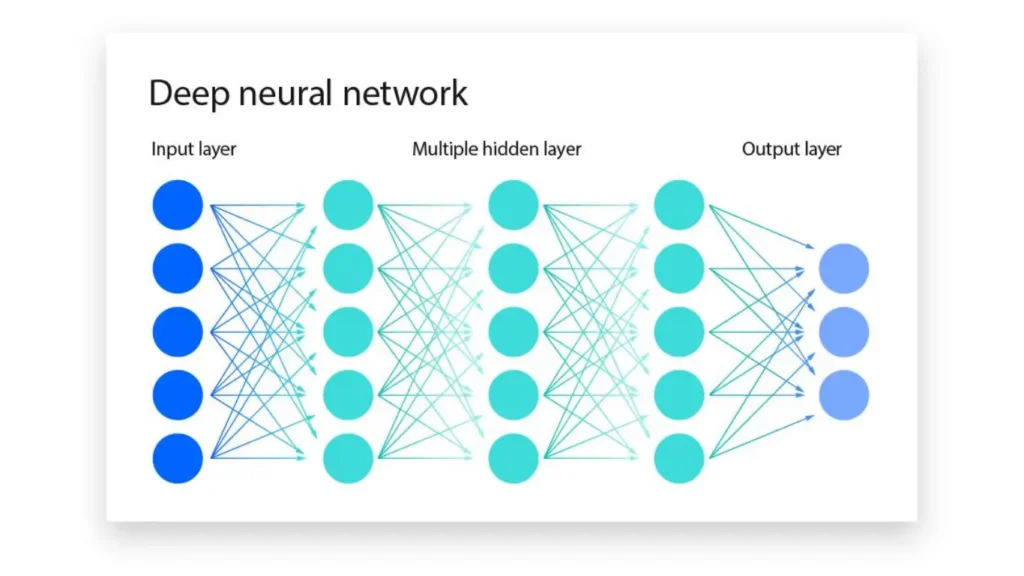
Artificial neural networks are computer systems designed to mimic certain aspects of how the human brain processes information. They consist of interconnected layers of artificial neurons that analyze data, recognize patterns, and learn from experience.
A neural network typically includes:
- Input layers that receive information
- Hidden layers that process data
- Output layers that generate results
As the system processes more information, it adjusts internal parameters to improve performance. This process is known as machine learning.
Neural networks are capable of handling complex tasks such as:
- Image recognition
- Speech recognition
- Language translation
- Pattern detection
- Predictive analytics
While neural network concepts existed before Hinton’s work, he played a critical role in making them practical and effective.
The Breakthrough of Deep Learning
One of Geoffrey Hinton’s most significant contributions is his role in advancing deep learning.
Deep learning refers to neural networks that contain multiple layers capable of learning increasingly sophisticated representations of data. These deeper networks allow machines to recognize complex patterns that would be difficult or impossible to identify using traditional programming methods.
For decades, deep neural networks faced significant challenges. Training large networks required enormous computing resources, and researchers struggled to optimize learning processes effectively.
Hinton and his colleagues developed innovative techniques that dramatically improved neural network training.
Their breakthroughs demonstrated that deep learning systems could outperform traditional AI approaches in numerous applications.
This work helped spark the modern AI revolution.
Today, deep learning powers many technologies that people use every day, including:
- Facial recognition systems
- Virtual assistants
- Search engines
- Recommendation algorithms
- Autonomous vehicles
- Generative AI models
Without Geoffrey Hinton’s contributions, many of these advancements might have taken much longer to emerge.
The ImageNet Moment That Changed Everything
A defining moment in AI history occurred in 2012.
A team led by Geoffrey Hinton developed a deep neural network known as AlexNet. The system competed in the ImageNet Large Scale Visual Recognition Challenge, a prestigious image classification competition.
AlexNet achieved dramatically better performance than competing systems.
The results shocked the AI community.
The network demonstrated that deep learning could significantly outperform traditional computer vision techniques when provided with sufficient data and computing power.
This success triggered a massive surge of interest in neural networks and deep learning research.
Technology companies quickly recognized the potential.
Organizations including Google, Microsoft, Amazon, Meta, and countless startups began investing heavily in AI development.
The modern AI boom can be traced directly to this pivotal breakthrough.
Geoffrey Hinton and Google
Following his deep learning successes, Geoffrey Hinton became increasingly involved with industry applications.
In 2013, Google acquired a startup founded by Hinton and his colleagues. He subsequently joined the company, where he continued researching artificial intelligence and machine learning.
At Google, Hinton contributed to projects involving:
- Neural network research
- Speech recognition
- Image analysis
- Machine learning systems
His work helped accelerate Google’s AI capabilities and influenced many technologies used by billions of people worldwide.
During this period, AI rapidly transitioned from a research topic into a commercial reality.
Machine learning became central to modern technology platforms, driving innovations across search, advertising, cloud computing, and consumer applications.
The Emergence of Generative AI
One of the most exciting developments in recent years has been the rise of generative artificial intelligence.
Generative AI systems can create:
- Text
- Images
- Videos
- Audio
- Software code
These capabilities have captured global attention and sparked widespread discussion about the future of work and creativity.
While Geoffrey Hinton did not directly create today’s large language models, his foundational work on neural networks and deep learning made these technologies possible.
Modern generative AI systems rely on many of the principles that Hinton spent decades developing and defending.
The remarkable capabilities of today’s AI tools demonstrate how far neural network research has progressed since its early experimental stages.
Why Geoffrey Hinton Warned About AI Risks
Despite being one of AI’s most influential pioneers, Geoffrey Hinton has also become one of its most prominent critics regarding potential risks.
In recent years, Hinton has expressed concerns about the rapid advancement of artificial intelligence.
He has warned that highly capable AI systems could eventually pose significant challenges related to:
- Misinformation
- Job displacement
- Cybersecurity
- Autonomous weapons
- Loss of human control
His concerns attracted global attention when he publicly discussed the need for greater caution and oversight in AI development.
Unlike many critics who lack technical expertise, Hinton’s warnings carry substantial weight because of his deep understanding of how advanced AI systems function.
He has emphasized that while AI offers enormous benefits, society must carefully consider potential unintended consequences.
AI’s Impact on Jobs and the Economy
One area where Geoffrey Hinton has raised concerns is employment.
Automation and artificial intelligence are already transforming labor markets worldwide.
AI systems can perform tasks involving:
- Data entry
- Customer service
- Content generation
- Financial analysis
- Software development
- Administrative work
While AI creates new opportunities, it may also disrupt traditional employment patterns.
Hinton believes governments, businesses, and educational institutions should proactively prepare for these changes.
Workforce reskilling and lifelong learning will likely become increasingly important as AI capabilities continue to expand.
The challenge is not necessarily that jobs will disappear entirely but that many occupations will evolve significantly.
The Ethical Challenges of Artificial Intelligence
As AI becomes more powerful, ethical considerations are gaining importance.
Geoffrey Hinton has highlighted several ethical challenges associated with advanced AI systems.
These include:
Bias and Fairness
AI systems learn from historical data, which may contain biases.
Without careful oversight, algorithms can reinforce existing inequalities.
Privacy
AI systems often require vast amounts of personal information to function effectively.
Protecting user privacy remains a major concern.
Transparency
Many advanced neural networks operate as “black boxes,” making it difficult to understand exactly how decisions are made.
Accountability
Determining responsibility when AI systems make mistakes can be complex.
These challenges underscore the need for responsible AI development practices.
The Future of Artificial Intelligence
Looking ahead, artificial intelligence is expected to become even more integrated into daily life.
Future AI systems may assist with:
- Scientific discovery
- Medical research
- Climate modeling
- Education
- Transportation
- Business operations
Many experts believe AI could help solve some of humanity’s most pressing challenges.
At the same time, rapid progress requires thoughtful governance and international cooperation.
Geoffrey Hinton has repeatedly emphasized that society should not simply focus on what AI can do but also on how it should be used.
Balancing innovation with responsibility will be one of the defining challenges of the coming decades.
Geoffrey Hinton’s Lasting Legacy
Few researchers have influenced technology as profoundly as Geoffrey Hinton.
His persistence during periods when neural networks were unpopular helped preserve and advance a field that would later transform the world.
Today, deep learning serves as the foundation for many of the most important technological breakthroughs of the 21st century.
From healthcare and finance to transportation and entertainment, industries across the globe are benefiting from innovations rooted in Hinton’s research.
His legacy extends beyond technical achievements.
By raising important questions about AI safety, ethics, and societal impact, Hinton continues to shape conversations about how humanity should navigate the age of intelligent machines.
Frequently Asked Questions About Geoffrey Hinton
Why is Geoffrey Hinton called the Godfather of AI?
Who is Geoffrey Hinton?
Geoffrey Hinton is a British-Canadian computer scientist widely known as the Godfather of AI due to his pioneering work in neural networks and deep learning.
He helped develop key neural network technologies that form the foundation of modern artificial intelligence systems.
Did Geoffrey Hinton help create ChatGPT?
Not directly. However, his research in deep learning made technologies like ChatGPT possible.
Why did Geoffrey Hinton leave Google?
Hinton left Google to speak more openly about the potential risks and dangers of advanced artificial intelligence.
Conclusion
Geoffrey Hinton’s contributions to artificial intelligence have fundamentally changed the world. Through decades of pioneering research in neural networks and deep learning, he helped create the technological foundation that powers today’s AI revolution.
His work enabled breakthroughs in image recognition, speech processing, machine learning, and generative AI, influencing virtually every major advancement in artificial intelligence over the past decade. At the same time, his warnings about AI risks remind us that technological progress must be accompanied by careful consideration of ethical, economic, and societal consequences.
As artificial intelligence continues to evolve, Geoffrey Hinton remains one of the most influential voices in the field. His achievements have earned him a place among the most important scientists of the modern era, while his ongoing advocacy for responsible AI development continues to guide discussions about the future.
Whether AI ultimately becomes humanity’s greatest technological achievement or presents unprecedented challenges, one thing is certain: Geoffrey Hinton’s work will remain at the center of the story. His vision, persistence, and groundbreaking discoveries helped launch the AI age, and his influence will continue to shape the future of technology for generations to come.
Interested in discovering how artificial intelligence is transforming the world? Check out our latest articles on The Incredible Rise of Humanoid Robots https://growthpoweredai.com/2026/06/02/incredible-rise-of-humanoid-robots/
Emily Carter
Technology Editor at GrowthPoweredAI
Emily Carter is a technology writer specializing in artificial intelligence, automation, future technology trends, and digital innovation. She researches the latest AI tools, emerging technologies, and business automation strategies to help readers understand how technology is shaping the future. Through in-depth research and practical insights, Emily creates informative content designed for entrepreneurs, professionals, and technology enthusiasts. Read more articles by Emily on GrowthPoweredAI.