Email marketing remains one of the highest-return digital marketing channels, generating an impressive ROI when executed correctly. Yet creating engaging email campaigns consistently can be time-consuming, especially for small businesses, marketers, and entrepreneurs juggling multiple responsibilities.
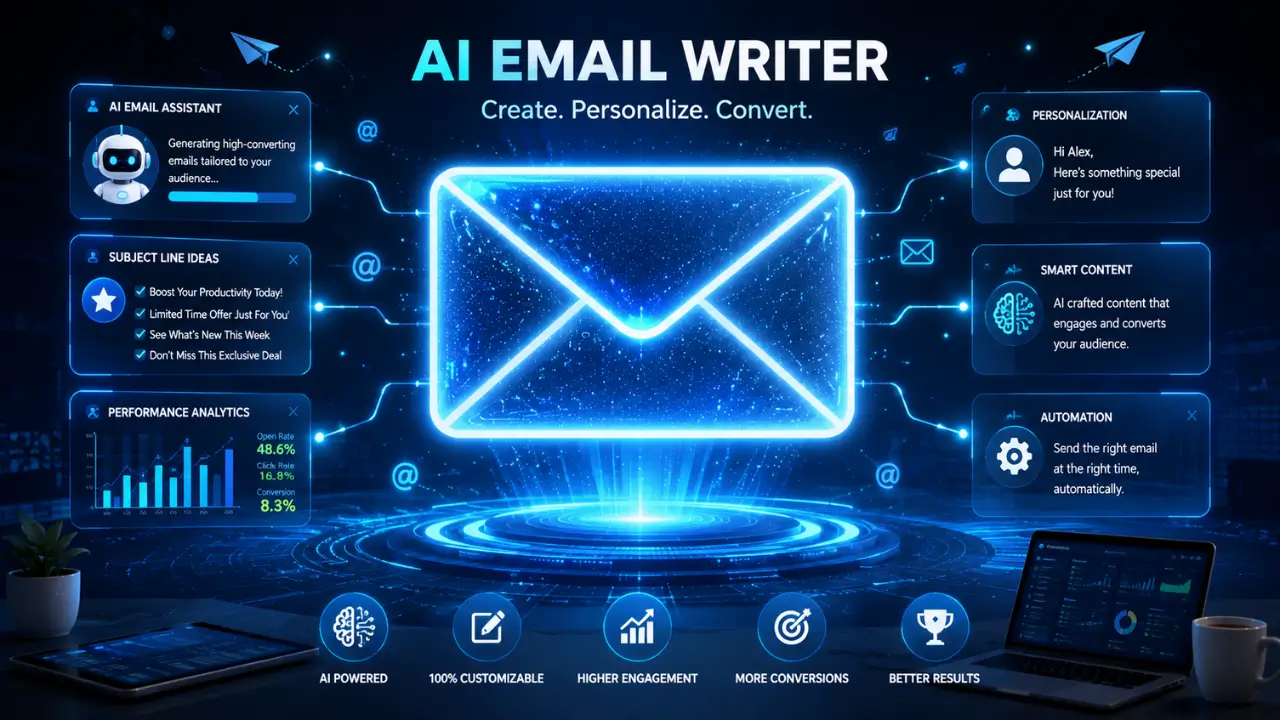
Fortunately, artificial intelligence has transformed email marketing. Modern AI email writers can generate compelling subject lines, persuasive sales copy, personalized newsletters, follow-up emails, abandoned cart sequences, welcome campaigns, promotional offers, and even A/B testing variations within seconds.
Instead of staring at a blank screen wondering what to write, marketers can now leverage AI to create professional-quality emails faster while maintaining their brand voice.
In this guide, we’ll explore the best AI email writers for marketing campaigns, compare their strengths, discuss their limitations, and explain how to use them effectively to increase engagement, click-through rates, and conversions.
Why AI Email Writers Are Changing Marketing
Artificial intelligence is no longer just a futuristic technology—it has become an essential marketing assistant.
Today’s AI writing platforms analyze billions of words to understand language patterns, persuasive writing techniques, emotional triggers, and customer behavior.
As a result, marketers can produce better emails in less time.
Benefits include:
- Faster content creation
- Better personalization
- Higher engagement
- Improved productivity
- Consistent brand messaging
- Easier A/B testing
- Reduced writer’s block
- Increased conversion opportunities
Rather than replacing marketers, AI acts as a creative partner that accelerates workflow while leaving strategic decisions in human hands.
How AI Email Writers Work
Most AI email generators use advanced Large Language Models (LLMs) trained on enormous datasets.
When you provide prompts such as:
- Product description
- Target audience
- Email objective
- Tone of voice
- Desired call-to-action
the AI predicts and generates text that aligns with your goals.
Some platforms go even further by analyzing customer behavior, CRM data, previous campaign performance, and segmentation to generate highly personalized email content.

Why Businesses Are Investing in AI Email Writing
Companies of every size—from solo entrepreneurs to global brands—are embracing AI because email marketing requires consistency.
Typical campaigns include:
- Welcome emails
- Lead nurturing sequences
- Product launches
- Holiday promotions
- Weekly newsletters
- Re-engagement campaigns
- Customer onboarding
- Transactional updates
- Upsell emails
- Cross-selling campaigns
Creating these manually every week quickly becomes overwhelming.
AI significantly reduces production time while improving consistency.
11 Best AI Email Writers for Marketing Campaigns
1. ChatGPT
ChatGPT has become one of the most versatile AI writing assistants available.
Its flexibility allows marketers to create virtually any type of email.
Examples include:
- Product launch emails
- Welcome sequences
- Newsletter content
- Sales promotions
- Webinar invitations
- Customer follow-ups
- Event reminders
Strengths
- Extremely customizable
- Excellent long-form writing
- Strong prompt flexibility
- Can mimic different brand voices
- Great brainstorming assistant
Best For
Small businesses, freelancers, agencies, startups, and content marketers.
2. Jasper AI
Jasper has built a strong reputation in marketing copywriting.
Its email templates help users quickly produce professional campaigns without starting from scratch.
Advantages
- Marketing-focused templates
- Brand voice features
- Campaign workflows
- Collaboration tools
- SEO integration
Ideal for marketing teams producing large volumes of campaigns.
3. Copy.ai
Copy.ai specializes in generating persuasive marketing copy.
Its email generator creates:
- Sales emails
- Follow-up emails
- Promotional offers
- Cold outreach
- Product announcements
It is particularly useful for sales teams.
4. Grammarly AI
Although known for grammar checking, Grammarly now offers AI writing assistance that improves:
- Clarity
- Professional tone
- Conciseness
- Readability
- Email rewriting
It’s an excellent editor after AI generates the first draft.
5. HubSpot AI
HubSpot integrates AI directly into its CRM.
This allows marketers to generate emails using customer information already stored in the platform.
Benefits include:
- Personalized campaigns
- CRM integration
- Automated workflows
- Smart segmentation
6. Mailchimp AI
Mailchimp has incorporated AI into its email marketing platform.
Features include:
- Subject line suggestions
- Email copy generation
- Product recommendations
- Send-time optimization
Perfect for ecommerce businesses.
7. Brevo AI (formerly Sendinblue)
Brevo combines email marketing automation with AI writing tools.
Users can quickly create:
- Promotional campaigns
- Welcome emails
- Newsletters
- Transactional messages
Its affordable pricing makes it attractive for startups.
8. Writesonic
Writesonic excels at creating persuasive marketing content.
Its AI email tools generate:
- Product promotions
- Launch announcements
- Event invitations
- Limited-time offers
It also integrates well with broader content marketing workflows.
9. Anyword
Anyword focuses heavily on performance marketing.
Its predictive scoring estimates how well copy may perform before you publish.
Features include:
- Performance predictions
- Conversion optimization
- Audience targeting
- Marketing analytics
10. Rytr
Rytr offers a budget-friendly solution for entrepreneurs.
Despite its lower cost, it generates impressive email content for:
- Newsletters
- Sales campaigns
- Customer communication
- Product promotions
11. Lavender
Lavender was designed primarily for sales outreach.
It helps users improve:
- Cold emails
- Response rates
- Personalization
- Sales engagement
Sales professionals frequently use Lavender to optimize prospecting campaigns.

Features to Look for in an AI Email Writer
Not all AI writing tools are created equal.
Before choosing one, consider whether it offers:
Personalization
The best AI platforms customize emails based on:
- Customer names
- Purchase history
- Interests
- Geography
- Previous interactions
Personalization significantly improves engagement.
Brand Voice
Maintaining a consistent tone is essential.
Look for tools that learn your:
- Writing style
- Vocabulary
- Formatting
- Preferred messaging
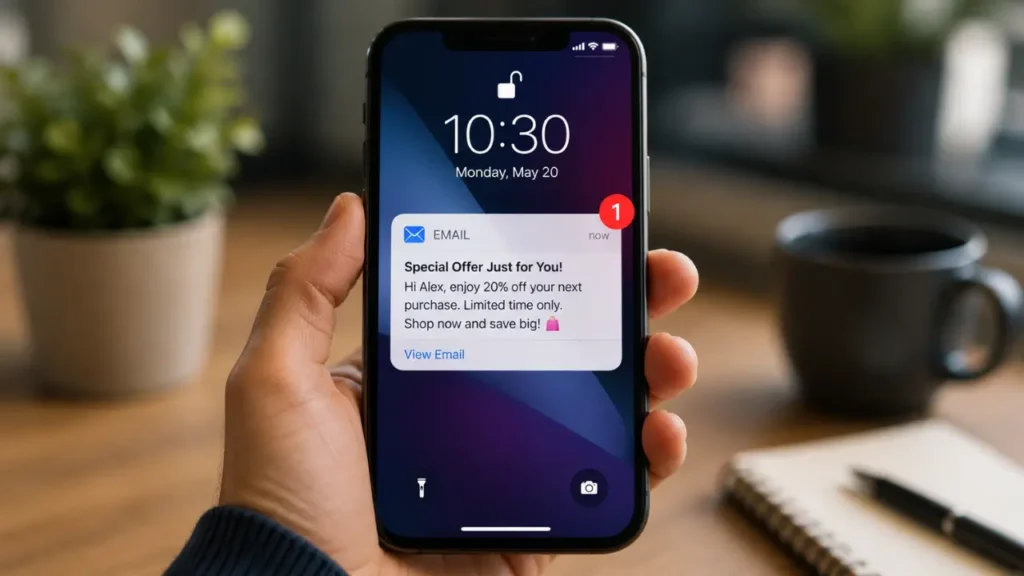
Subject Line Generator
The subject line often determines whether an email gets opened.
Good AI tools generate multiple options and help optimize open rates.
Examples:
- Powerful questions
- Curiosity-driven headlines
- Benefit-focused subject lines
- Urgency-based approaches
Multiple Variations
High-performing marketers constantly test.
The best AI platforms instantly generate several versions for:
- Headlines
- CTAs
- Introductions
- Closing paragraphs
This makes A/B testing much easier.
CRM Integration
If your business uses:
- HubSpot
- Salesforce
- Mailchimp
- Klaviyo
- ActiveCampaign
AI integration can dramatically streamline workflows.
How AI Improves Email Marketing Performance
AI enhances nearly every stage of campaign creation.
Better Personalization
Customers increasingly expect relevant content.
AI helps tailor messaging to individual users.
Faster Production
What once required hours can now take minutes.
Marketing teams spend less time drafting and more time optimizing campaigns.
Improved Engagement
AI identifies persuasive language patterns that encourage:
- More opens
- More clicks
- More replies
- More purchases
Better Testing
Instead of manually writing five different subject lines, AI can generate dozens almost instantly.
Consistent Quality
Whether writing one email or one hundred, AI helps maintain quality across campaigns.
Best Practices for Using AI Email Writers
AI is powerful, but results improve when marketers follow a strategic process.
1. Start with a Detailed Prompt
Instead of saying:
Write a marketing email.
Try:
Write a friendly promotional email introducing our new AI productivity software to small business owners. Keep the tone conversational, highlight three benefits, and include a strong CTA encouraging a free trial.
Specific prompts produce better results.
2. Edit Every Draft
AI should not replace human review.
Always verify:
- Accuracy
- Brand voice
- Pricing
- Links
- Offers
- Legal compliance
3. Personalize Beyond First Names
Modern customers expect more than:
“Hello John.”
Include:
- Previous purchases
- Browsing behavior
- Industry
- Customer lifecycle stage
4. Test Subject Lines
Generate multiple AI subject lines.
Then perform A/B testing.
Small improvements in open rates can significantly increase revenue.
5. Keep Emails Focused
Avoid overwhelming readers.
One email should generally have:
- One objective
- One primary CTA
- One clear message
Common Mistakes to Avoid
Many businesses misuse AI.
Avoid these pitfalls.
Publishing Without Editing
AI occasionally generates incorrect information.
Always review content carefully.
Sounding Too Generic
Customize AI output to reflect your brand personality.
Ignoring Customer Segmentation
Different audiences require different messaging.
Segment campaigns whenever possible.
Overusing Buzzwords
Simple, clear language usually outperforms overly complex marketing jargon.

AI Email Writers vs Human Copywriters
A common question is whether AI will replace professional copywriters.
The answer is more nuanced.
AI excels at:
- Drafting
- Brainstorming
- Scaling content
- Generating variations
- Speed
Humans remain superior at:
- Emotional storytelling
- Brand strategy
- Creativity
- Humor
- Cultural nuance
- Complex persuasion
The most successful marketing teams combine both strengths.
The Future of AI Email Marketing
AI continues evolving rapidly.
Over the next few years, expect capabilities such as:
Hyper-Personalization
Emails may adapt automatically based on real-time customer behavior.
Predictive Content
AI could recommend products before customers actively search for them.
Dynamic Emails
Content may change automatically depending on:
- Location
- Weather
- Purchase history
- Time of day
- Inventory levels
Voice Integration
Future campaigns could generate both written emails and voice versions for smart assistants.
Smarter Automation
AI agents may eventually manage complete marketing campaigns with minimal human intervention while still requiring oversight for strategy, ethics, and brand direction.
Frequently Asked Questions About the Best AI Email Writers for Marketing Campaigns
Are AI email writers worth using?
Yes. They save time, improve productivity, and can help marketers create higher-quality campaigns. However, human review is still essential before sending emails.
Can AI improve email open rates?
AI can generate stronger subject lines and more engaging preview text, which may improve open rates when combined with audience segmentation and testing.
Which AI email writer is best for beginners?
ChatGPT, Rytr, and Copy.ai are among the easiest platforms for beginners because of their intuitive interfaces and flexible templates.
Can AI write entire email sequences?
Yes. Most modern AI tools can create complete sequences, including welcome series, abandoned cart campaigns, lead nurturing flows, onboarding emails, and promotional campaigns.
Is AI-generated email content SEO-friendly?
SEO primarily applies to websites rather than emails. However, AI-generated email content can support your SEO strategy by driving qualified traffic to optimized landing pages and blog posts.
Will AI replace email marketers?
No. AI automates repetitive writing tasks, but successful campaigns still rely on human creativity, strategy, audience understanding, and performance analysis.
Final Thoughts
The best AI email writers for marketing campaigns have become indispensable tools for businesses that want to save time, improve productivity, and create more engaging customer communications. Platforms such as ChatGPT, Jasper AI, Copy.ai, HubSpot AI, Mailchimp AI, Writesonic, and others enable marketers to draft persuasive emails, test multiple subject lines, and personalize campaigns at scale.
While AI dramatically accelerates content creation, it works best when paired with human expertise. Marketers should use AI to generate ideas and first drafts, then refine the messaging to match their brand voice, verify facts, and ensure every campaign aligns with business goals.
As artificial intelligence continues to evolve, email marketing will become even more personalized, data-driven, and efficient. Businesses that embrace these tools thoughtfully will be better positioned to build stronger customer relationships, increase engagement, and drive long-term growth.
Emily Carter
Technology Editor at GrowthPoweredAI
Emily Carter is a technology writer specializing in artificial intelligence, automation, future technology trends, and digital innovation. She researches the latest AI tools, emerging technologies, and business automation strategies to help readers understand how technology is shaping the future. Through in-depth research and practical insights, Emily creates informative content designed for entrepreneurs, professionals, and technology enthusiasts. Read more articles by Emily on GrowthPoweredAI.