Artificial intelligence (AI) is no longer reserved for large technology companies. Today, restaurants of every size—from neighborhood cafés and family-owned diners to global fast-food chains—are discovering how AI can simplify operations, reduce costs, improve customer experiences, and increase revenue.
Consumers expect faster service, personalized recommendations, convenient online ordering, and consistent food quality. Meeting those expectations while controlling labor costs and food waste is challenging. This is where AI becomes a valuable business tool.
Modern AI systems analyze customer behavior, predict demand, automate repetitive tasks, improve inventory management, optimize marketing campaigns, and even help chefs create new menu items. Rather than replacing restaurant staff, AI often enhances productivity by allowing employees to focus on hospitality and customer relationships.
In this guide, you’ll learn how restaurants can use AI in practical ways, why it matters, and how the technology is shaping the future of the food service industry.
Why Artificial Intelligence Matters for Restaurants
The restaurant industry operates on thin profit margins. Every wasted ingredient, scheduling mistake, or slow service interaction can affect profitability.
Artificial intelligence helps restaurants make smarter decisions using data instead of guesswork.
Benefits include:
- Faster customer service
- Reduced operating costs
- Better inventory control
- Increased customer satisfaction
- Higher sales through personalization
- Less food waste
- Improved employee productivity
- Better forecasting
Restaurants that embrace AI today are positioning themselves to compete more effectively in an increasingly digital marketplace.
1. AI Chatbots Improve Customer Service
One of the easiest ways restaurants can implement AI is through intelligent chatbots.
Customers often ask repetitive questions such as:
- What are today’s specials?
- Are you open?
- Can I reserve a table?
- Do you have gluten-free options?
- Is outdoor seating available?
- Do you deliver?
Instead of requiring employees to answer these questions repeatedly, AI chatbots can respond instantly 24/7.
Benefits
- Faster responses
- Reduced phone calls
- Better customer satisfaction
- More reservations
- Lower labor costs
Modern AI chatbots can also take food orders, recommend menu items, and communicate in multiple languages.
2. AI Helps Predict Customer Demand
One of the biggest challenges restaurants face is knowing how much food to prepare.
Too little inventory leads to shortages.
Too much inventory leads to waste.
Artificial intelligence analyzes:
- Previous sales
- Holidays
- Weather
- Local events
- School schedules
- Seasonal trends
- Sporting events
Using this information, AI predicts customer traffic with remarkable accuracy.
For example, a pizza restaurant may discover that rainy Friday evenings generate 35% more delivery orders than average.
This helps owners prepare enough ingredients while avoiding unnecessary waste.
3. Smart Inventory Management
Food waste costs restaurants thousands of dollars each year.
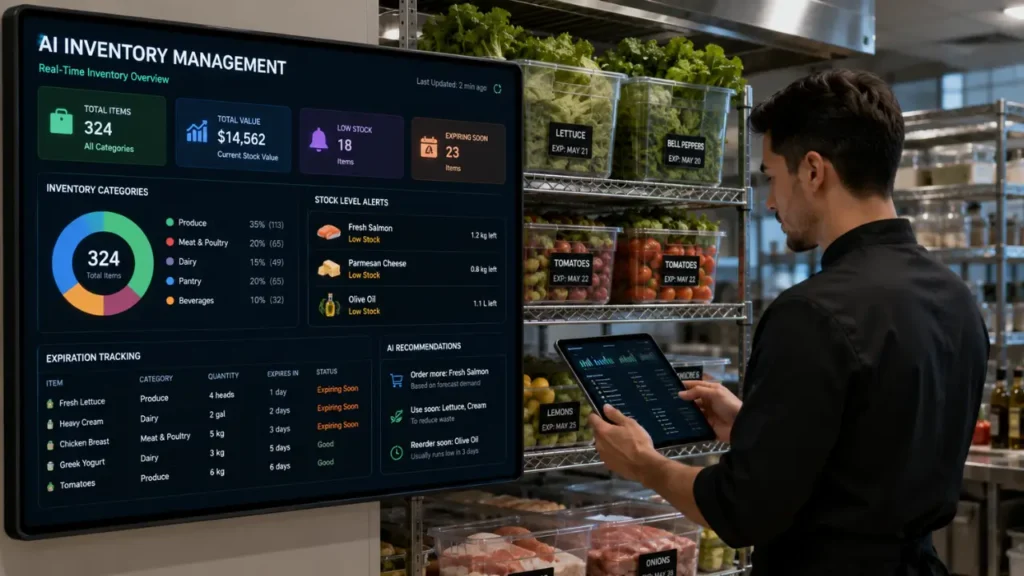
AI inventory systems monitor:
- Ingredient usage
- Expiration dates
- Stock levels
- Purchasing trends
- Supplier deliveries
When inventory reaches a predefined threshold, AI can automatically recommend reordering products.
Some systems even detect unusual inventory losses that may indicate theft or operational problems.
The result is:
- Less spoilage
- Better purchasing
- Lower costs
- Improved profitability
4. Personalized Menu Recommendations
Streaming services recommend movies.
Online stores recommend products.
Restaurants can now recommend food using AI.
By analyzing previous customer orders, AI can suggest meals customers are most likely to enjoy.
Examples include:
- “Would you like fries with your burger?”
- “Customers who ordered this pasta also loved our garlic bread.”
- “You usually order spicy food. Try our new chili chicken.”
These recommendations increase average order value while improving customer satisfaction.
5. Dynamic Pricing
Some restaurants are experimenting with AI-powered pricing.
Artificial intelligence can adjust prices based on:
- Demand
- Time of day
- Inventory
- Customer traffic
- Special promotions
For example:
A coffee shop may offer discounted pastries during the last hour before closing rather than throwing them away.
Similarly, restaurants may promote slower menu items automatically.
This strategy reduces waste while increasing revenue.
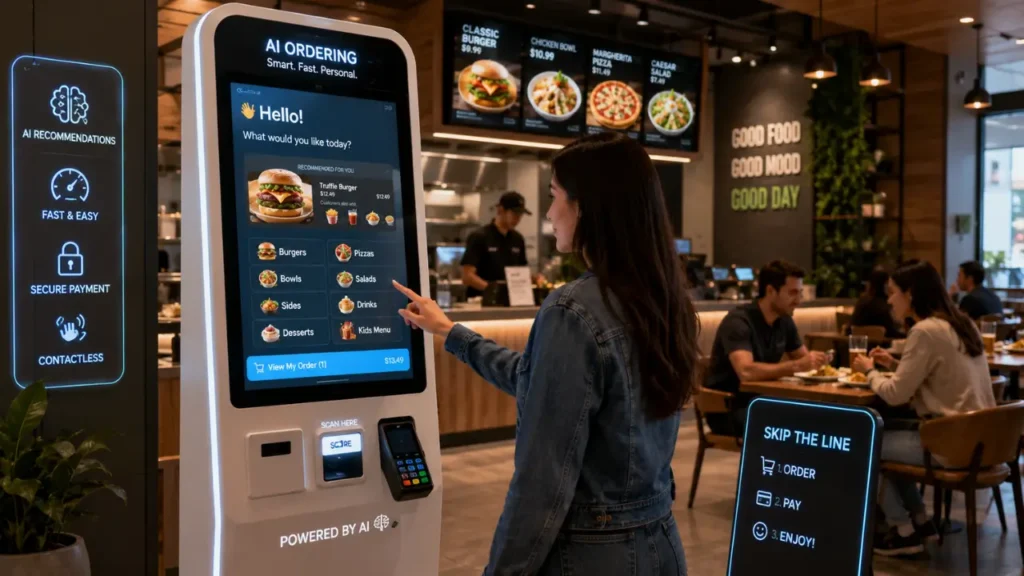
6. AI Improves Online Ordering
Online food ordering continues to grow every year.
AI enhances digital ordering by:
- Suggesting upgrades
- Detecting incomplete orders
- Recommending desserts
- Offering drink pairings
- Predicting customer preferences
Instead of generic upselling, AI personalizes every recommendation.
This often increases average order size without making customers feel pressured.
7. Better Employee Scheduling
Labor is one of the largest restaurant expenses.
Poor scheduling causes:
- Understaffing
- Overtime
- Employee burnout
- Long customer wait times
AI scheduling software analyzes:
- Historical traffic
- Employee availability
- Labor laws
- Seasonal demand
- Local events
Managers receive optimized schedules that reduce labor costs while ensuring enough employees are available during busy periods.
Employees also appreciate more predictable schedules.
8. AI Reduces Food Waste
Food waste affects both profits and sustainability.
Artificial intelligence identifies:
- Ingredients nearing expiration
- Slow-selling menu items
- Overstocked products
- Waste patterns
Restaurants can then:
- Adjust purchasing
- Create limited-time specials
- Bundle meals
- Offer discounts
Some AI systems even monitor kitchen trash bins using computer vision to identify exactly what food is being discarded.
This data helps chefs improve portion sizes and preparation methods.
9. Voice AI for Drive-Thrus
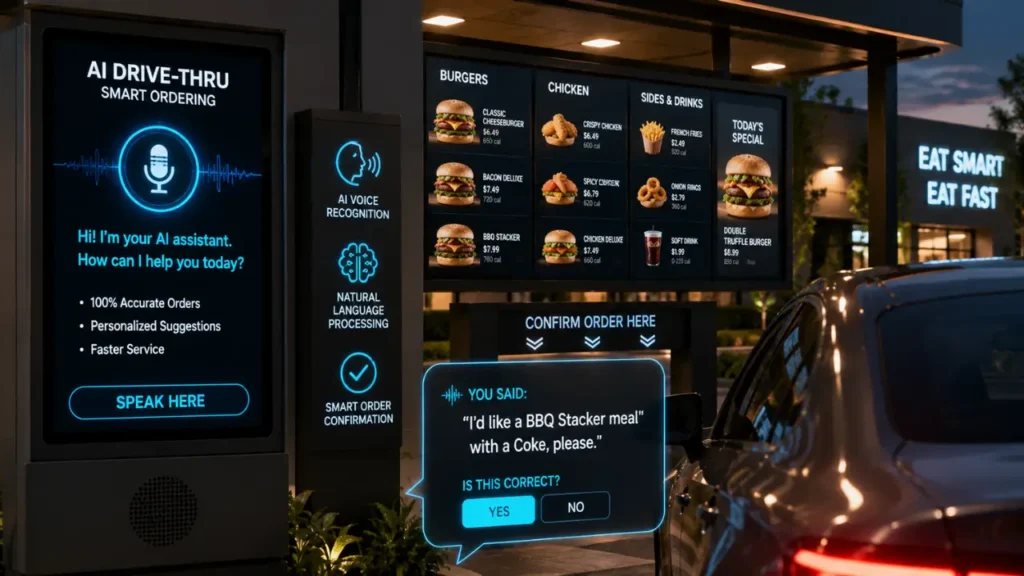
Drive-thru restaurants increasingly use AI voice assistants.
Instead of relying entirely on human cashiers, AI can:
- Take orders
- Answer questions
- Confirm customizations
- Recommend additional items
- Process multiple languages
Benefits include:
- Faster service
- Shorter lines
- More consistent ordering
- Improved accuracy
Human employees remain available for more complex customer requests.
10. AI-Powered Marketing Campaigns
Marketing becomes far more effective with AI.
Instead of sending identical promotions to every customer, AI creates personalized campaigns.
For example:
A customer who regularly buys coffee every weekday might receive:
“Enjoy 20% off your favorite cappuccino tomorrow morning.”
Meanwhile, a family that orders pizza every Friday may receive a family meal discount before the weekend.
This personalized marketing increases customer engagement while reducing unnecessary advertising costs.
11. Predictive Maintenance for Kitchen Equipment
Restaurant equipment failures can be extremely expensive.
Imagine:
- Refrigerator failure
- Oven malfunction
- Ice machine breakdown
- Freezer problems
AI monitors equipment performance using sensors.
It detects early warning signs before major failures occur.
Maintenance can then be scheduled before equipment breaks down.
Benefits include:
- Lower repair costs
- Reduced downtime
- Better food safety
- Longer equipment lifespan
12. AI Supports Restaurant Managers
Managers make hundreds of decisions every day.
Artificial intelligence provides valuable insights such as:
- Best-selling menu items
- Peak dining hours
- Employee productivity
- Profit margins
- Customer satisfaction
- Inventory performance
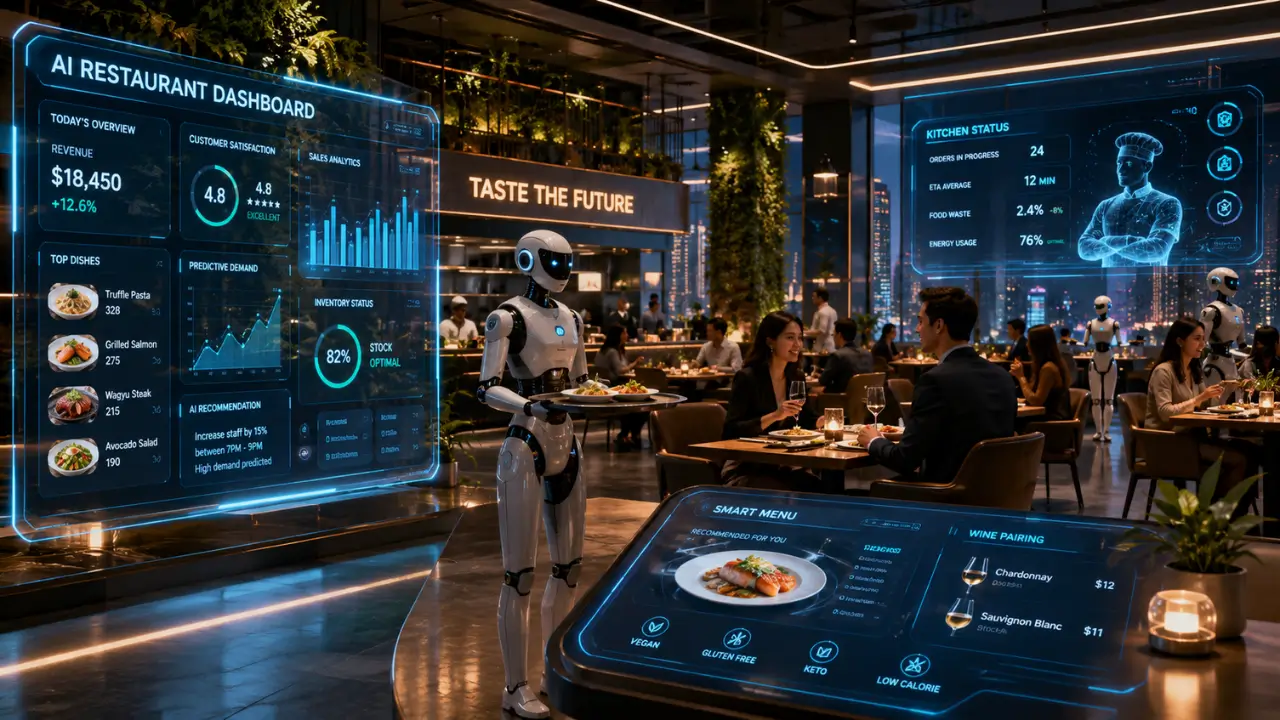
Rather than spending hours analyzing spreadsheets, managers receive easy-to-understand dashboards with actionable recommendations.
13. AI Improves Food Delivery Operations
Food delivery has become essential for many restaurants.
AI optimizes delivery by:
- Finding faster routes
- Grouping nearby orders
- Predicting delivery times
- Reducing driver idle time
- Improving dispatch efficiency
Customers receive more accurate delivery estimates, while restaurants lower transportation costs.
14. AI Helps Create Better Menus
Artificial intelligence analyzes customer preferences and purchasing behavior.
It identifies:
- Popular ingredients
- Seasonal trends
- High-profit dishes
- Low-performing menu items
Restaurant owners can redesign menus using this information.
For example:
If AI discovers that customers frequently order grilled chicken with avocado, chefs may create additional menu items featuring similar ingredients.
This data-driven approach improves both customer satisfaction and profitability.
15. AI Helps Restaurants Build Customer Loyalty
Loyal customers generate significant long-term revenue.
AI strengthens loyalty programs by analyzing:
- Visit frequency
- Spending habits
- Favorite meals
- Birthday dates
- Special occasions
Customers receive personalized rewards instead of generic coupons.
Examples include:
- Free dessert after ten visits
- Birthday discounts
- Exclusive menu previews
- Personalized meal recommendations
Customers feel appreciated, encouraging repeat visits.
AI in Fast Food vs. Fine Dining
Artificial intelligence benefits different restaurant types in unique ways.
Fast Food
Fast-food restaurants often use AI for:
- Drive-thru automation
- Order accuracy
- Inventory management
- Kitchen workflow optimization
- Mobile ordering
Speed and consistency are the primary goals.
Casual Dining
Casual restaurants frequently implement AI for:
- Reservations
- Waitlist management
- Personalized promotions
- Customer feedback analysis
- Staffing optimization
Fine Dining
Fine dining establishments may use AI to:
- Recommend wine pairings
- Manage reservations
- Analyze guest preferences
- Predict ingredient demand
- Enhance personalized service
Rather than replacing the human touch, AI supports staff in delivering exceptional experiences.
Challenges of Using AI in Restaurants
Although AI offers many advantages, restaurants should also consider potential challenges.
Initial Investment
Some AI platforms require upfront costs for software, equipment, and employee training.
Fortunately, many cloud-based AI solutions are now affordable even for small businesses.
Data Privacy
Restaurants collect customer information through:
- Loyalty programs
- Online orders
- Mobile apps
- Reservations
Businesses must protect this data and comply with applicable privacy regulations.
Transparent privacy policies and secure systems help build customer trust.
Staff Training
Employees need time to learn new systems.
Proper training ensures AI becomes a helpful tool rather than a source of frustration.
Successful implementation depends on involving staff early and explaining how AI supports—not replaces—their work.
Maintaining the Human Touch
Hospitality is about more than efficiency.
Friendly conversations, personalized service, and genuine care remain essential.
The most successful restaurants use AI to handle repetitive tasks while allowing employees to focus on creating memorable guest experiences.
The Future of AI in Restaurants
The future promises even more exciting innovations.
Emerging AI technologies may include:
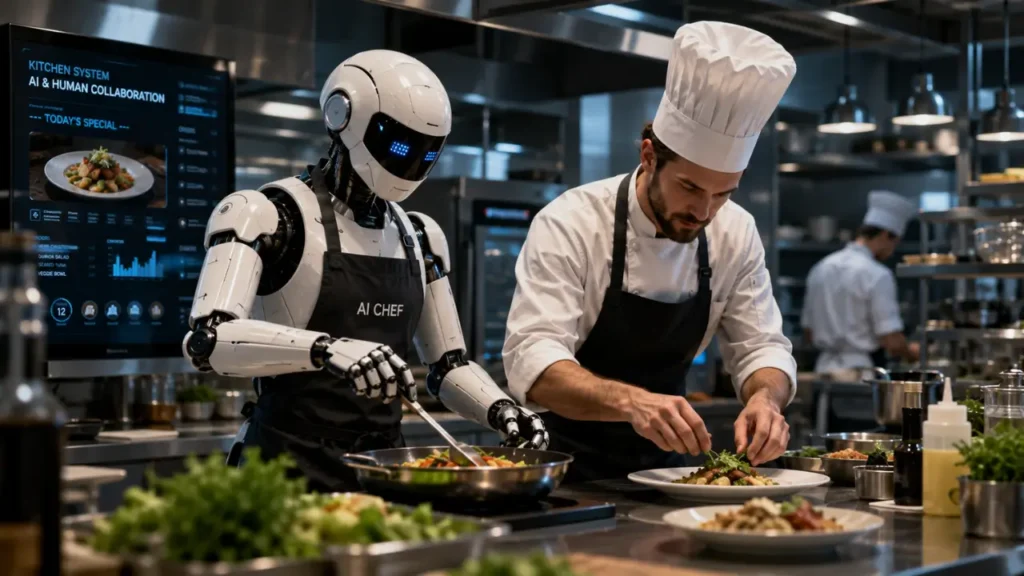
Fully Automated Kitchens
Robotic cooking assistants will handle repetitive food preparation while chefs focus on creativity and quality.
Computer Vision Food Inspection
AI cameras will automatically inspect meals for consistency before they reach customers.
Hyper-Personalized Dining
Restaurants may recognize returning guests (with appropriate consent) and automatically prepare customized recommendations based on dietary preferences and previous visits.
AI Nutrition Guidance
Menus could instantly recommend healthier alternatives based on customer goals, allergies, or nutritional needs.
Autonomous Delivery
Delivery robots and self-driving vehicles may reduce delivery costs while improving speed in urban areas.
Tips for Small Restaurant Owners Starting with AI
You don’t need a huge budget to begin using AI.
Start with one or two tools that address your biggest operational challenges.
Good starting points include:
- AI chatbot for customer service
- Inventory management software
- Online ordering recommendations
- Automated email marketing
- AI-powered reservation system
- Demand forecasting tools
- Employee scheduling software
Measure the results over several months before expanding to additional AI solutions.
Frequently Asked Questions About How Restaurants Can Use AI
Can small restaurants afford AI?
Yes. Many AI tools operate on monthly subscription models and are designed specifically for small and medium-sized businesses.
Will AI replace restaurant employees?
In most cases, no. AI automates repetitive tasks, allowing employees to focus on customer service, food quality, and hospitality.
Does AI reduce food waste?
Yes. AI predicts demand, tracks inventory, monitors expiration dates, and identifies waste patterns, helping restaurants purchase and prepare food more efficiently.
Can AI increase restaurant profits?
Yes. By improving efficiency, reducing waste, optimizing staffing, personalizing marketing, and increasing average order values, AI can significantly improve profitability.
Is AI difficult to implement?
Not necessarily. Many modern AI platforms integrate with existing point-of-sale systems and can be implemented gradually without major operational disruptions.
Conclusion
Artificial intelligence is reshaping the restaurant industry by helping businesses operate more efficiently, serve customers better, and make smarter decisions. From AI-powered chatbots and demand forecasting to personalized marketing, inventory optimization, and predictive maintenance, these technologies are becoming practical tools for restaurants of all sizes.
The key to success is using AI to complement human hospitality rather than replace it. While technology can automate repetitive tasks and uncover valuable insights, the warmth, creativity, and personal attention provided by restaurant staff remain essential to an outstanding dining experience.
As AI continues to evolve, restaurants that adopt these innovations thoughtfully will be better equipped to reduce costs, increase customer loyalty, and stay competitive in a rapidly changing market. Whether you own a small café, a family restaurant, or a growing chain, embracing AI today can help build a more efficient, profitable, and future-ready business.
Interested in discovering how artificial intelligence is transforming the world? Check out our latest articles on https://growthpoweredai.com/category/automation-tools/
Emily Carter
Technology Editor at GrowthPoweredAI
Emily Carter is a technology writer specializing in artificial intelligence, automation, future technology trends, and digital innovation. She researches the latest AI tools, emerging technologies, and business automation strategies to help readers understand how technology is shaping the future. Through in-depth research and practical insights, Emily creates informative content designed for entrepreneurs, professionals, and technology enthusiasts. Read more articles by Emily on GrowthPoweredAI.