Artificial intelligence is rapidly changing the way people interact with technology. From smart assistants and automation tools to autonomous vehicles and advanced robotics, AI has become deeply integrated into modern life. One of the most exciting innovations emerging from this transformation is the development of AI smart glasses.
Once considered a futuristic concept found only in science fiction, AI smart glasses are now becoming practical tools for communication, productivity, navigation, and entertainment. By combining artificial intelligence, wearable computing, augmented reality, and voice recognition into a single device, smart glasses are redefining how people access information in their daily lives.
Technology companies worldwide are investing heavily in wearable AI devices because many experts believe smart glasses could become the next major computing platform. Similar to how smartphones revolutionized communication over the past two decades, AI smart glasses may fundamentally change how humans interact with digital information in the future.
In this guide, we’ll explore how AI smart glasses work, their key benefits, real-world applications, industry challenges, and what the future may hold for this revolutionary technology.
What Are AI Smart Glasses?
AI smart glasses are wearable devices that combine traditional eyewear with advanced digital capabilities powered by artificial intelligence.
Unlike standard eyeglasses, these devices include built-in cameras, microphones, speakers, sensors, wireless connectivity, and AI software that allow users to access information and interact with digital systems in real time.
The primary goal of AI smart glasses is to deliver useful information without forcing users to constantly look at smartphones or computer screens.
Key Features of AI Smart Glasses
Modern AI smart glasses can perform a wide variety of functions, including:
- Real-time language translation
- Voice-controlled AI assistance
- GPS navigation
- Object recognition
- Photo and video capture
- Augmented reality experiences
- Notification management
- Accessibility support
- Productivity enhancement
By integrating these capabilities into a lightweight wearable device, manufacturers are creating a seamless connection between the digital and physical worlds.
How AI Smart Glasses Work
AI smart glasses rely on several advanced technologies working together simultaneously.
Artificial Intelligence
Artificial intelligence serves as the core engine behind smart glasses.
AI systems analyze visual information, process spoken commands, recognize objects, and generate contextual responses based on user needs.
For example, if a user looks at a famous landmark, the glasses may instantly identify the location and provide historical information. Similarly, AI can translate conversations in real time, making communication easier across different languages.
Cameras and Sensors
Most AI smart glasses contain integrated cameras and sensors that continuously gather environmental data.
These components help the device:
- Detect movement
- Identify objects
- Measure distances
- Recognize faces
- Support augmented reality functions
The collected information is then analyzed by artificial intelligence to deliver intelligent assistance.
Voice Recognition Technology
One of the most important features of AI smart glasses is hands-free interaction.
Advanced voice recognition allows users to ask questions, issue commands, and request information naturally without touching the device.
This creates a more intuitive experience than traditional mobile devices and helps users remain focused on their surroundings.
Benefits of AI Smart Glasses
The growing popularity of AI smart glasses is largely driven by the significant advantages they offer across personal and professional environments.
Hands-Free Access to Information
Users can receive notifications, directions, reminders, and answers without reaching for a smartphone.
This convenience helps improve focus and reduces digital distractions throughout the day.
Increased Productivity
Many industries are exploring how AI smart glasses can improve workplace efficiency.
Workers can access instructions, documentation, and communication tools while keeping their hands free.
This is particularly valuable in fields such as:
- Healthcare
- Manufacturing
- Logistics
- Engineering
- Field services
Real-Time Language Translation
Language barriers can be a major obstacle in international communication.
AI-powered smart glasses can translate conversations almost instantly, helping travelers, students, and business professionals communicate more effectively.
Enhanced Accessibility
AI smart glasses have enormous potential to improve accessibility for individuals with disabilities.
Features may include:
- Text-to-speech assistance
- Object recognition
- Facial recognition
- Navigation guidance
- Environmental awareness tools
These capabilities help users navigate the world more independently.
AI Smart Glasses vs Smartphones
For years, smartphones have served as the primary gateway to digital information. However, AI smart glasses introduce a new approach to human-computer interaction.
Advantages Over Smartphones
Unlike smartphones, smart glasses allow users to:
- Access information hands-free
- Receive visual guidance without looking down
- Use voice commands naturally
- Stay focused on real-world activities
This creates a more seamless interaction between technology and everyday life.
Why Smartphones Are Still Important
Despite their advantages, AI smart glasses are unlikely to replace smartphones completely in the immediate future.
Current limitations include:
- Battery life
- Display size
- Processing power
- Privacy concerns
Most experts believe smart glasses will complement smartphones rather than replace them entirely in the near term.
Popular AI Smart Glasses on the Market
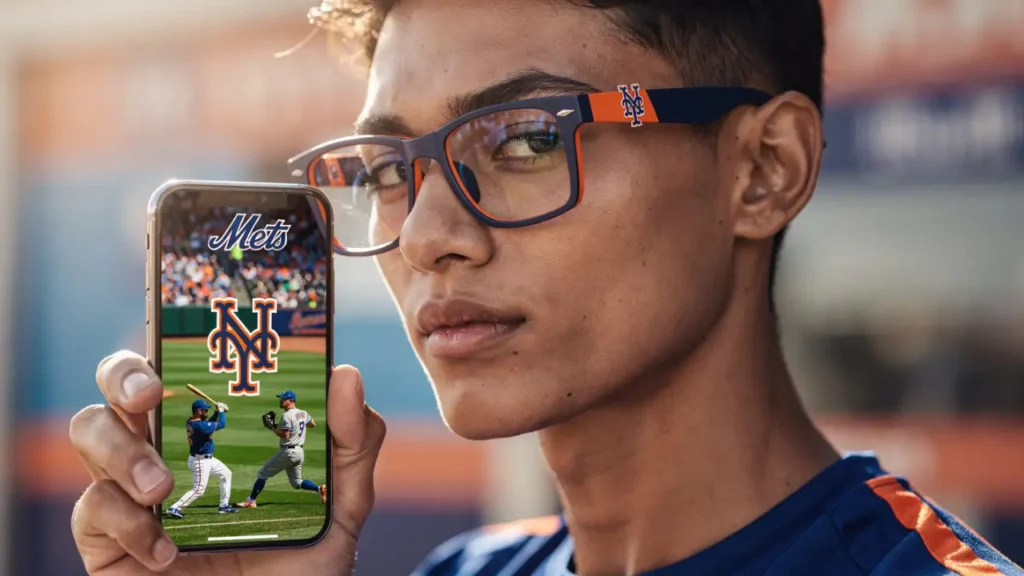
Several major technology companies are investing heavily in AI-powered eyewear.
Meta Smart Glasses
Meta‘s smart glasses integrate voice assistants, cameras, and AI-powered features designed for everyday use.
Users can capture content, listen to music, and interact with artificial intelligence using voice commands.
Google Smart Glass Projects
Google continues to explore augmented reality and wearable AI technologies, viewing smart glasses as a potential evolution of personal computing.
Emerging AI Startups
Numerous startups are developing specialized smart glasses focused on:
- Healthcare
- Education
- Accessibility
- Industrial productivity
- Navigation
This growing competition is accelerating innovation across the industry.
AI Smart Glasses and the Future of Work
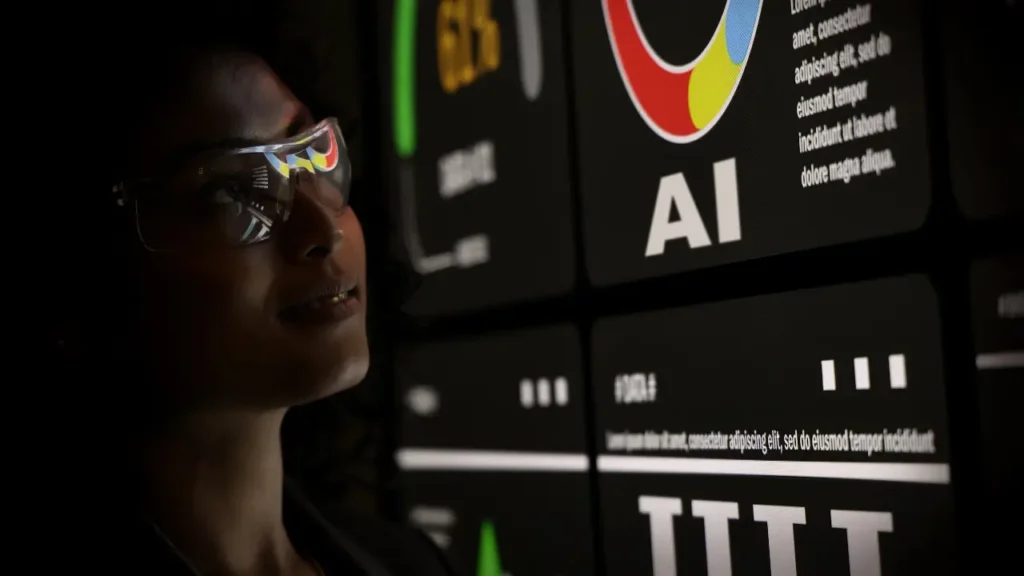
The workplace may be one of the biggest beneficiaries of AI smart glasses.
Manufacturing and Logistics
Employees can receive instructions directly within their field of vision, improving efficiency and reducing errors.
Healthcare
Medical professionals can access patient information, diagnostic tools, and treatment guidance without interrupting consultations.
Remote Collaboration
AI smart glasses may enhance remote teamwork by allowing experts to provide real-time assistance from virtually anywhere in the world.
As businesses continue adopting artificial intelligence, wearable devices are likely to become valuable workplace tools.
Privacy and Security Challenges
Despite their potential, AI smart glasses also raise important concerns.
Data Collection
Many devices continuously collect visual and audio information from their surroundings.
Facial Recognition
Advanced recognition systems may create concerns regarding surveillance and personal privacy.
Cybersecurity Risks
As connected devices, smart glasses must be protected against hacking, unauthorized access, and data breaches.
Balancing innovation with privacy protection will be critical for widespread adoption.
The Future of AI Smart Glasses
Industry experts believe AI smart glasses are still in the early stages of development.
Future innovations may include:
- Advanced augmented reality displays
- Longer battery life
- More powerful AI assistants
- Improved visual recognition
- Health monitoring features
- Better smartphone integration
As hardware becomes smaller and more efficient, smart glasses may become one of the most important consumer technologies of the next decade.
AI Smart Glasses in Everyday Life
While much of the discussion surrounding AI smart glasses focuses on future possibilities, the technology is already finding practical applications in everyday life. As artificial intelligence becomes more powerful and wearable devices become more comfortable, smart glasses are evolving from experimental gadgets into useful daily companions.
For travelers, AI smart glasses can provide instant language translation, navigation assistance, and local recommendations. Imagine walking through a foreign city and receiving real-time directions directly within your field of vision without constantly checking your smartphone. Restaurants, landmarks, and transportation options can be identified instantly, making travel more convenient and immersive.
Students can also benefit from AI-powered eyewear. Smart glasses may provide instant access to educational content, definitions, and study materials while learning. In the future, augmented reality features could allow students to visualize complex concepts such as scientific models, historical reconstructions, or engineering designs directly in front of them.
For professionals, AI smart glasses offer opportunities to improve productivity and efficiency. During meetings, users could receive reminders, access notes, or view important information without interrupting the conversation. Sales representatives, consultants, and field workers may find wearable AI particularly valuable because it allows them to remain focused on clients while accessing critical information.
Even everyday activities such as shopping can be enhanced. AI systems may compare prices, display product reviews, identify ingredients, or recommend alternatives while users browse stores. This creates a more informed and personalized shopping experience.
As technology continues to mature, AI smart glasses could become a natural extension of daily life, helping people accomplish tasks more efficiently while staying connected to the world around them.
Challenges Facing the AI Smart Glasses Industry
Although AI smart glasses show tremendous promise, several obstacles must be overcome before they achieve widespread adoption.
One of the biggest challenges is battery life. Smart glasses must remain lightweight and comfortable while supporting cameras, sensors, displays, wireless connectivity, and artificial intelligence processing. Balancing performance with battery efficiency remains a significant engineering challenge.
Cost is another factor limiting adoption. Many advanced smart glasses currently carry premium price tags that place them beyond the reach of average consumers. As production scales and technology becomes more affordable, prices are expected to decrease, but affordability remains an important consideration.
Social acceptance also plays a role. Some consumers may feel uncomfortable wearing devices that contain visible cameras and recording capabilities. Public concerns about surveillance and privacy can influence how quickly these products become mainstream.
Additionally, developers must address technical limitations such as display quality, connectivity issues, and environmental performance. Smart glasses need to function reliably in different lighting conditions, weather environments, and usage scenarios.
Regulatory concerns may also affect the market. Governments around the world are exploring new rules regarding artificial intelligence, facial recognition, data collection, and wearable technology. Compliance with these regulations will be essential for manufacturers seeking widespread adoption.
Despite these challenges, industry experts remain optimistic. Many of the same concerns once surrounded smartphones, yet technological improvements eventually transformed them into essential devices used by billions of people worldwide.
Predictions for AI Smart Glasses by 2030
The next few years could represent a turning point for wearable technology. Many analysts predict that AI smart glasses will become significantly more capable, affordable, and widely adopted by the end of the decade.
By 2030, artificial intelligence assistants may become proactive rather than reactive. Instead of waiting for commands, AI systems could anticipate user needs based on context, habits, and location. Smart glasses may provide relevant information automatically, helping users make better decisions throughout the day.
Advances in augmented reality could dramatically improve visual experiences. Future smart glasses may project high-quality digital content directly into the user’s field of vision, creating seamless interactions between physical and digital environments.
Healthcare applications are also expected to expand. AI-powered glasses may monitor health indicators, detect signs of fatigue, track eye movements, and provide wellness recommendations in real time. These features could play an important role in preventive healthcare and personal well-being.
Education may undergo a transformation as well. Students could interact with immersive learning environments that bring lessons to life through augmented reality and artificial intelligence. Complex concepts could become easier to understand through visual demonstrations and real-time guidance.
In the workplace, AI smart glasses may become standard equipment across numerous industries. Employees could access information instantly, collaborate remotely, and receive AI-powered assistance without disrupting their workflow.
While it is impossible to predict exactly how the technology will evolve, one thing is increasingly clear: AI smart glasses are positioned to become a major part of the future technology landscape. As artificial intelligence continues to advance, wearable devices may fundamentally reshape how humans interact with information, communicate with one another, and experience the world around them.
Frequently Asked Questions (FAQ)
What are AI smart glasses?
AI smart glasses are wearable devices that combine artificial intelligence, sensors, cameras, and augmented reality features to provide real-time information and assistance.
Can AI smart glasses replace smartphones?
Not yet. While smart glasses offer hands-free convenience, smartphones still provide greater processing power, larger displays, and broader functionality.
Are AI smart glasses safe?
Most smart glasses are designed with safety in mind, but privacy and cybersecurity concerns remain important considerations for manufacturers and users.
What industries benefit most from AI smart glasses?
Healthcare, logistics, manufacturing, education, and field services are among the industries expected to benefit significantly from wearable AI technologies.
Will AI smart glasses become mainstream?
Many technology experts believe AI smart glasses could become as common as smartphones as the technology continues to improve and prices become more affordable.
Conclusion
AI smart glasses represent one of the most exciting advancements in wearable technology. By combining artificial intelligence, augmented reality, voice recognition, and real-time information access, these devices have the potential to transform how people communicate, work, learn, and navigate the world around them.
Although challenges related to privacy, battery life, and adoption remain, innovation in this field is accelerating rapidly. As artificial intelligence becomes increasingly integrated into everyday life, smart glasses may evolve from a niche gadget into an essential personal technology tool.
The future of computing may not be something we carry in our pockets—it may be something we wear every day.
What do you think about the future of AI smart glasses? Could wearable AI eventually replace smartphones, or will the two technologies continue working together?
Share your thoughts in the comments below and stay connected with growthpowerdai.com for the latest insights on artificial intelligence, technology innovation, and future tech trends.
Want to learn more about how artificial intelligence is transforming everyday life? Explore our text about “How Artificial Intelligence Is Transforming the Job Market in 2026″https://growthpoweredai.com/2026/05/30/artificial-intelligence-change-work/
Emily Carter
Technology Editor at GrowthPoweredAI
Emily Carter is a technology writer specializing in artificial intelligence, automation, future technology trends, and digital innovation. She researches the latest AI tools, emerging technologies, and business automation strategies to help readers understand how technology is shaping the future. Through in-depth research and practical insights, Emily creates informative content designed for entrepreneurs, professionals, and technology enthusiasts. Read more articles by Emily on GrowthPoweredAI.