
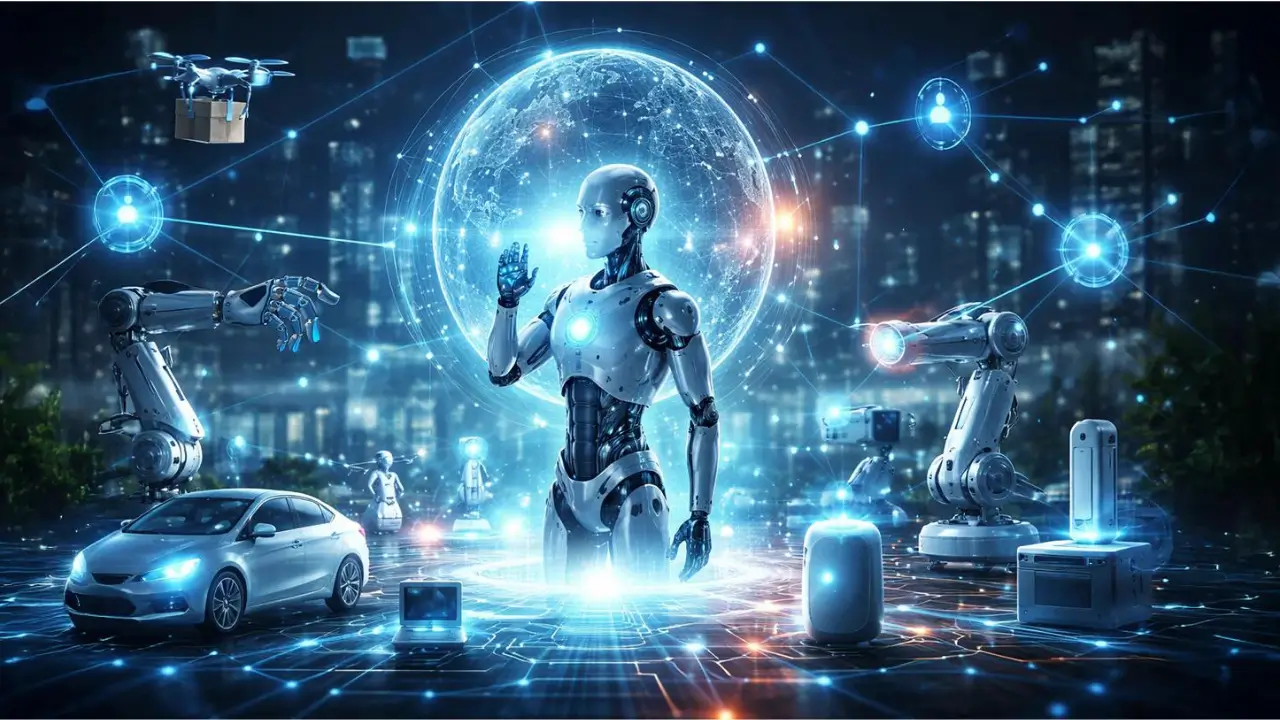
Artificial intelligence continues to reshape the world at an astonishing pace. Every year introduces groundbreaking innovations that redefine how businesses operate, how scientists solve complex problems, and how everyday people interact with technology. This year has been particularly remarkable, with AI making significant advances in healthcare, robotics, software development, education, cybersecurity, and creative industries.
From multimodal AI models capable of understanding text, images, audio, and video simultaneously to intelligent robots performing increasingly complex tasks, the latest AI breakthroughs are no longer futuristic concepts—they are becoming part of everyday life.
In this article, we’ll explore the 10 biggest AI breakthroughs of the year, explain why they matter, and examine how they will influence industries and society in the years ahead.
Why This Year Has Been So Important for Artificial Intelligence
Artificial intelligence has experienced rapid development over the past decade, but this year represents a major turning point. Improvements in computing power, larger datasets, more efficient AI architectures, and increased investment have accelerated innovation faster than many experts predicted.
Several important trends have driven these breakthroughs:
- More powerful large language models
- Better reasoning capabilities
- Advanced AI agents
- Improved robotics
- Faster scientific discoveries
- More reliable AI safety systems
- Wider enterprise adoption
Together, these developments are moving AI from being an assistant to becoming an intelligent collaborator capable of solving increasingly sophisticated problems.
1. AI Models Can Now Reason Instead of Simply Predict
One of the most impressive breakthroughs has been the emergence of AI systems that perform significantly better at logical reasoning.
Earlier AI models primarily predicted the next word in a sentence. While effective, they often struggled with complex decision-making and multi-step problem solving.
Modern AI systems now demonstrate stronger abilities in:
Mathematical reasoning
AI can solve advanced equations, verify calculations, and explain every step involved.
Coding
Developers increasingly rely on AI to:
- Generate software
- Detect bugs
- Optimize performance
- Explain existing code
- Create documentation
Multi-step planning
Instead of answering isolated questions, AI can now develop complete plans, revise them when needed, and adapt as new information becomes available.
This improvement makes AI dramatically more useful for professional work.
2. Multimodal AI Has Become Mainstream
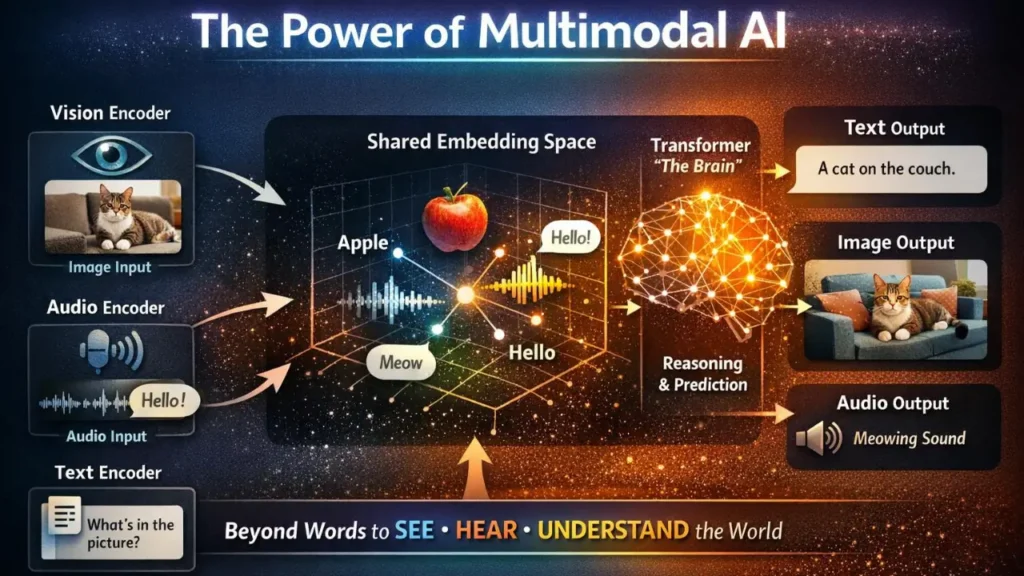
Perhaps the biggest technological leap is the rise of multimodal artificial intelligence.
Instead of processing only text, modern AI understands multiple forms of information simultaneously.
These include:
- Images
- Voice
- Video
- Documents
- Charts
- Screenshots
- Handwriting
Imagine uploading a photo of a broken appliance, speaking your question aloud, and receiving a detailed repair guide—all within seconds.
Businesses are already using multimodal AI for:
- Customer support
- Medical imaging
- Product design
- Manufacturing inspections
- Technical troubleshooting
This represents one of the largest changes in how humans interact with computers.
3. AI Agents Are Becoming Digital Employees
One of the hottest topics this year is the emergence of AI agents.
Unlike traditional chatbots, AI agents can perform complete tasks with minimal human supervision.
Examples include:
- Scheduling meetings
- Researching information
- Writing reports
- Managing spreadsheets
- Organizing emails
- Booking travel
- Monitoring projects
Instead of simply answering questions, these systems execute workflows independently.
Many companies believe AI agents will become an essential part of every workplace over the next few years.
4. AI Is Revolutionizing Healthcare
Healthcare continues to be one of the greatest beneficiaries of artificial intelligence.
Recent breakthroughs include:
Earlier Disease Detection
AI systems now identify diseases from medical images with remarkable accuracy.
They assist doctors by detecting:
- Cancer
- Heart disease
- Eye disorders
- Lung conditions
- Neurological diseases
Earlier diagnosis often leads to significantly better patient outcomes.
Personalized Medicine
Artificial intelligence can analyze:
- Medical history
- Genetics
- Lifestyle
- Lab results
This enables highly personalized treatment recommendations instead of one-size-fits-all medicine.
Drug Discovery
Perhaps the most exciting advance is AI-assisted pharmaceutical research.
Tasks that once required years of laboratory work can now be accelerated through AI-driven simulations, helping researchers identify promising drug candidates much faster.
5. Robotics Has Reached a New Level
Humanoid robots are improving faster than ever.
This year, robots have demonstrated impressive abilities such as:
- Walking naturally
- Climbing stairs
- Picking up fragile objects
- Understanding spoken instructions
- Working alongside humans
Factories are increasingly using AI-powered robots that learn from experience instead of relying solely on fixed programming.
Warehouse automation has also become smarter thanks to machine learning.
The combination of robotics and AI is creating machines capable of adapting to changing environments rather than repeating identical tasks.
6. AI Video Generation Has Improved Dramatically
Creating professional-quality videos once required expensive equipment and editing expertise.
Today’s AI tools can generate realistic videos from simple text prompts.
Businesses use these technologies for:
- Marketing campaigns
- Product demonstrations
- Educational content
- Social media videos
- Employee training
Video editing has also become much faster.
AI can automatically:
- Remove backgrounds
- Improve audio
- Generate subtitles
- Translate voices
- Edit scenes
- Create animations
This is transforming digital content creation across industries.
7. AI Is Accelerating Scientific Discovery
Researchers are increasingly relying on artificial intelligence to solve problems that once seemed impossible.
AI assists scientists by analyzing enormous datasets much faster than humans can.
Applications include:
Climate Research
Artificial intelligence improves:
- Weather forecasting
- Climate modeling
- Disaster prediction
- Environmental monitoring
Material Science
Researchers are discovering stronger, lighter, and more sustainable materials with AI-assisted simulations.
Space Exploration
AI supports:
- Satellite analysis
- Mission planning
- Autonomous spacecraft
- Planetary mapping
Scientific discovery is becoming significantly faster thanks to intelligent computing.

8. AI Cybersecurity Has Become Smarter
As cyber threats become more sophisticated, artificial intelligence has become one of the strongest defenses.
Modern cybersecurity platforms use AI to detect unusual behavior before attacks cause damage.
Capabilities include:
Threat Detection
AI monitors millions of events in real time.
It identifies suspicious activity far faster than traditional software.
Fraud Prevention
Banks increasingly rely on AI to detect:
- Identity theft
- Credit card fraud
- Suspicious transactions
Automated Response
Instead of waiting for human intervention, AI can isolate infected systems immediately, reducing the spread of cyberattacks.
This proactive approach significantly improves organizational security.
9. Enterprise AI Adoption Has Exploded
Artificial intelligence is no longer limited to technology companies.
Businesses of every size now integrate AI into daily operations.
Popular applications include:
Customer Service
AI-powered assistants answer questions 24/7 while reducing support costs.
Marketing
Marketers use AI for:
- SEO optimization
- Content generation
- Advertising
- Personalization
- Email campaigns
Human Resources
AI streamlines:
- Resume screening
- Candidate matching
- Employee onboarding
- Training recommendations
Finance
Financial teams automate:
- Invoice processing
- Expense management
- Forecasting
- Risk analysis
Enterprise AI is quickly becoming a standard business tool rather than a competitive advantage.
10. AI Safety and Responsible Development Have Improved
As artificial intelligence becomes more capable, responsible development has become increasingly important.
Major improvements this year include:
Better Alignment
Researchers continue refining methods to ensure AI follows human instructions more accurately.
Reduced Hallucinations
Modern models are generally better at identifying uncertainty and producing more reliable answers, though errors can still occur.
Stronger Privacy Controls
Organizations are investing heavily in secure AI systems that protect sensitive information and comply with evolving regulations.
Ethical AI Development
Many companies now establish dedicated AI governance teams responsible for:
- Transparency
- Fairness
- Accountability
- Risk management
These efforts aim to ensure AI benefits society while minimizing potential harms.
Industries Experiencing the Greatest AI Transformation
Artificial intelligence is changing nearly every sector, but some industries are advancing particularly quickly.
Healthcare
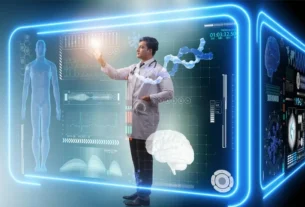
Doctors receive AI-assisted diagnostics and treatment recommendations.
Education
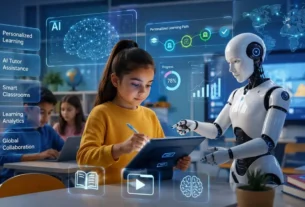
Students benefit from personalized tutoring systems available around the clock.
Manufacturing
Factories become more efficient through predictive maintenance and intelligent automation.
Transportation
Autonomous driving technology continues to improve with better perception and decision-making.
Retail
AI enhances customer experiences through personalized recommendations and smarter inventory management.
Finance
Banks improve fraud detection, customer support, and investment analysis using AI-driven insights.
Challenges That Still Need to Be Solved
Despite remarkable progress, artificial intelligence still faces important challenges.
Data Privacy
Organizations must protect personal information while training and deploying AI systems.
Energy Consumption
Training advanced AI models requires significant computing power, prompting efforts to improve efficiency.
Bias
Developers continue working to reduce unfair outcomes caused by biased training data.
Regulation
Governments worldwide are creating new frameworks to ensure AI is developed and used responsibly.
Addressing these issues will be critical for sustaining public trust and long-term innovation.
What Businesses Should Do Next
Companies that want to remain competitive should begin exploring AI strategically rather than waiting for the technology to mature further.
Practical steps include:
- Identify repetitive tasks suitable for automation.
- Train employees to work effectively with AI tools.
- Invest in secure and ethical AI solutions.
- Pilot AI projects before scaling across the organization.
- Measure results using clear productivity and cost-saving metrics.
Businesses that adopt AI thoughtfully today are likely to gain significant advantages in efficiency, innovation, and customer satisfaction.
The Future of Artificial Intelligence
Experts believe these breakthroughs are only the beginning.
Over the next few years, we can expect AI to become:
- More autonomous
- More personalized
- Better at reasoning
- Better integrated with robotics
- More energy-efficient
- More accessible to small businesses
- More deeply embedded in everyday products and services
Rather than replacing human creativity, AI is increasingly positioned as a tool that augments human capabilities, helping people solve problems faster and make more informed decisions.
Frequently Asked Questions About the Biggest AI Breakthroughs of the Year
What is the biggest AI breakthrough this year?
Many experts consider the rise of multimodal AI and advanced reasoning models among the most significant breakthroughs because they dramatically expand what AI systems can understand and accomplish.
How are AI agents different from chatbots?
AI agents go beyond conversation by completing tasks, managing workflows, and interacting with software on a user’s behalf.
Which industries benefit the most from AI?
Healthcare, finance, manufacturing, education, retail, cybersecurity, and software development are among the sectors seeing the greatest impact.
Is AI replacing human jobs?
AI is automating certain repetitive tasks, but it is also creating new roles that focus on managing, improving, and collaborating with intelligent systems. Many organizations are redesigning jobs rather than eliminating them entirely.
What should beginners learn first?
Understanding the basics of machine learning, generative AI, prompt engineering, automation tools, and AI ethics provides a strong foundation for anyone entering the field.
Conclusion
The biggest AI breakthroughs of the year demonstrate that artificial intelligence is evolving from a helpful digital assistant into a powerful collaborator capable of transforming industries and daily life. Advances in reasoning, multimodal understanding, AI agents, robotics, healthcare, scientific research, cybersecurity, and enterprise automation are redefining what technology can achieve.
For businesses, professionals, and technology enthusiasts, staying informed about these developments is essential. Organizations that embrace AI responsibly and strategically will be better positioned to innovate, improve productivity, and deliver greater value to customers.
As AI continues to mature, the pace of innovation is unlikely to slow. The breakthroughs we celebrate today are laying the foundation for an even more intelligent, connected, and efficient future.