Space has always fascinated humanity. From ancient civilizations observing the stars to modern astronauts living aboard the International Space Station, our desire to explore the universe has driven remarkable scientific achievements. Today, space technology innovations are advancing faster than ever, revolutionizing not only space exploration but also everyday life on Earth.
Modern technologies such as artificial intelligence, reusable rockets, quantum communication, autonomous spacecraft, advanced robotics, and next-generation satellites are making missions safer, more affordable, and increasingly ambitious. Governments and private companies alike are investing billions of dollars into developing technologies that could eventually lead humans to Mars, establish lunar bases, and even explore distant planets.
In this article, you’ll discover the most important space technology innovations shaping the future, how they impact our daily lives, and what exciting developments we can expect over the next decade.
Why Space Technology Matters More Than Ever
Many people assume that space technology only benefits astronauts. In reality, countless innovations developed for space missions eventually improve life on Earth.
Examples include:
- GPS navigation
- Weather forecasting
- Satellite internet
- Medical imaging
- Water purification systems
- Solar panel improvements
- Fire-resistant materials
- Advanced robotics
Every time you check Google Maps, watch satellite television, or receive severe weather alerts, you’re benefiting from decades of space research.
As humanity prepares for deeper exploration of the Moon and Mars, investments in space technology continue to generate breakthroughs across numerous industries.
The New Era of Space Exploration
Unlike the Space Race of the 1960s, today’s exploration is driven by collaboration between government agencies and private companies.
Organizations such as NASA, ESA, JAXA, CSA, ISRO, and commercial aerospace companies are accelerating innovation at unprecedented speed.
The goals have become even more ambitious:
- Permanent lunar habitats
- Human missions to Mars
- Space tourism
- Asteroid mining
- Deep-space telescopes
- Planetary defense systems
- Commercial space stations
Achieving these objectives requires revolutionary technology.
1. Reusable Rocket Technology
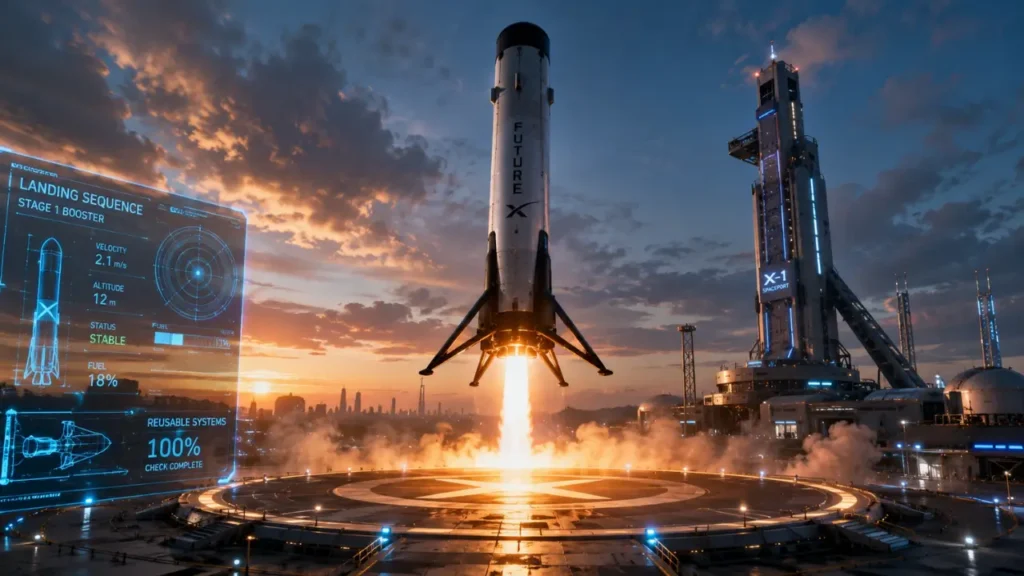
Perhaps the most significant breakthrough in modern aerospace engineering is the development of reusable rockets.
For decades, rockets were discarded after a single launch, making missions extraordinarily expensive.
Today’s reusable launch systems can return safely to Earth, undergo inspections, and fly again.
Benefits include:
Lower launch costs
Reusing expensive rocket components dramatically reduces mission expenses.
Increased launch frequency
Companies can perform more launches each year without building entirely new rockets.
Faster mission preparation
Refurbishment takes far less time than manufacturing brand-new launch vehicles.
Reduced environmental waste
Although rocket launches still impact the environment, reusing hardware significantly decreases industrial waste.
Reusable rockets have completely transformed the economics of space travel.
2. Artificial Intelligence in Space Missions
Artificial Intelligence (AI) has become one of the most valuable tools in modern space exploration.
Spacecraft generate enormous amounts of scientific data that would take humans years to analyze manually.
AI now assists in:
- Navigation
- Image recognition
- Hazard detection
- Equipment monitoring
- Predictive maintenance
- Autonomous decision-making
AI-powered planetary exploration
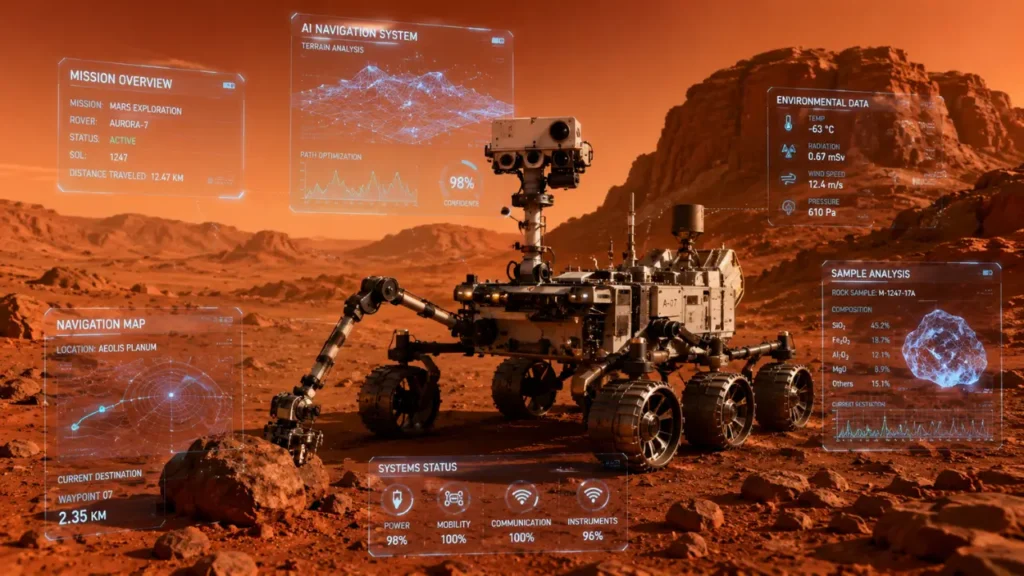
Future Mars rovers may operate almost independently, making scientific decisions without waiting for instructions from Earth.
Since communication delays between Earth and Mars can exceed 20 minutes, autonomous AI systems are becoming essential.
AI also helps spacecraft identify:
- Mineral deposits
- Signs of water
- Geological formations
- Weather changes
- Safe landing zones
3. Autonomous Spacecraft
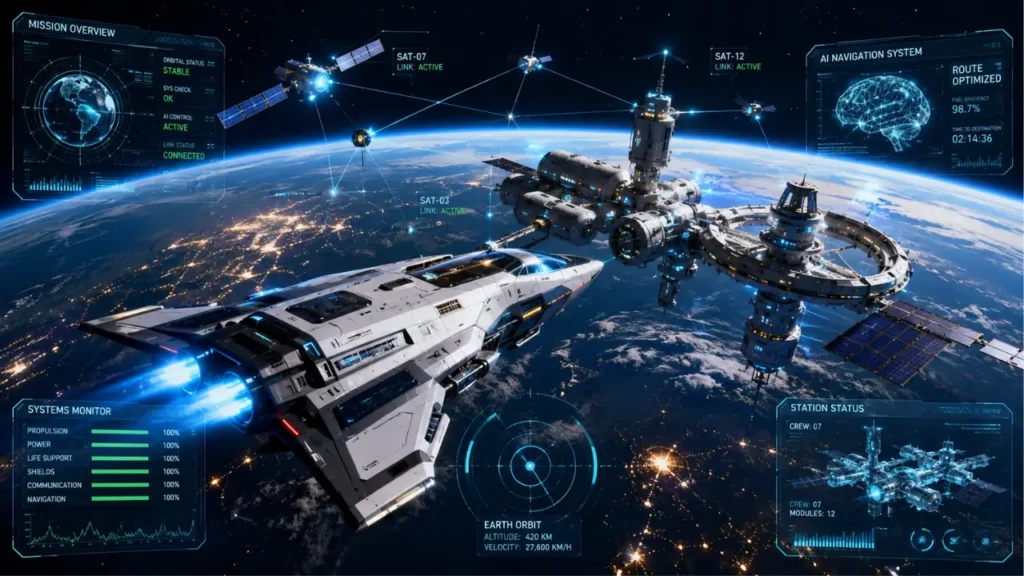
Modern spacecraft increasingly rely on autonomous navigation.
Instead of requiring continuous guidance from mission control, future spacecraft can:
- Avoid obstacles
- Adjust trajectories
- Repair minor system failures
- Optimize fuel usage
- Prioritize scientific targets
This autonomy is especially important for missions traveling millions—or even billions—of kilometers from Earth.
Deep-space exploration simply becomes impossible without intelligent onboard systems.
4. Advanced Satellite Technology
Satellites are becoming smaller, smarter, and far more powerful.
Miniaturization allows engineers to launch dozens—or even hundreds—of satellites during a single mission.
Modern satellite innovations include:
Earth observation
High-resolution satellites monitor:
- Climate change
- Deforestation
- Ocean temperatures
- Natural disasters
- Agricultural productivity
Communication
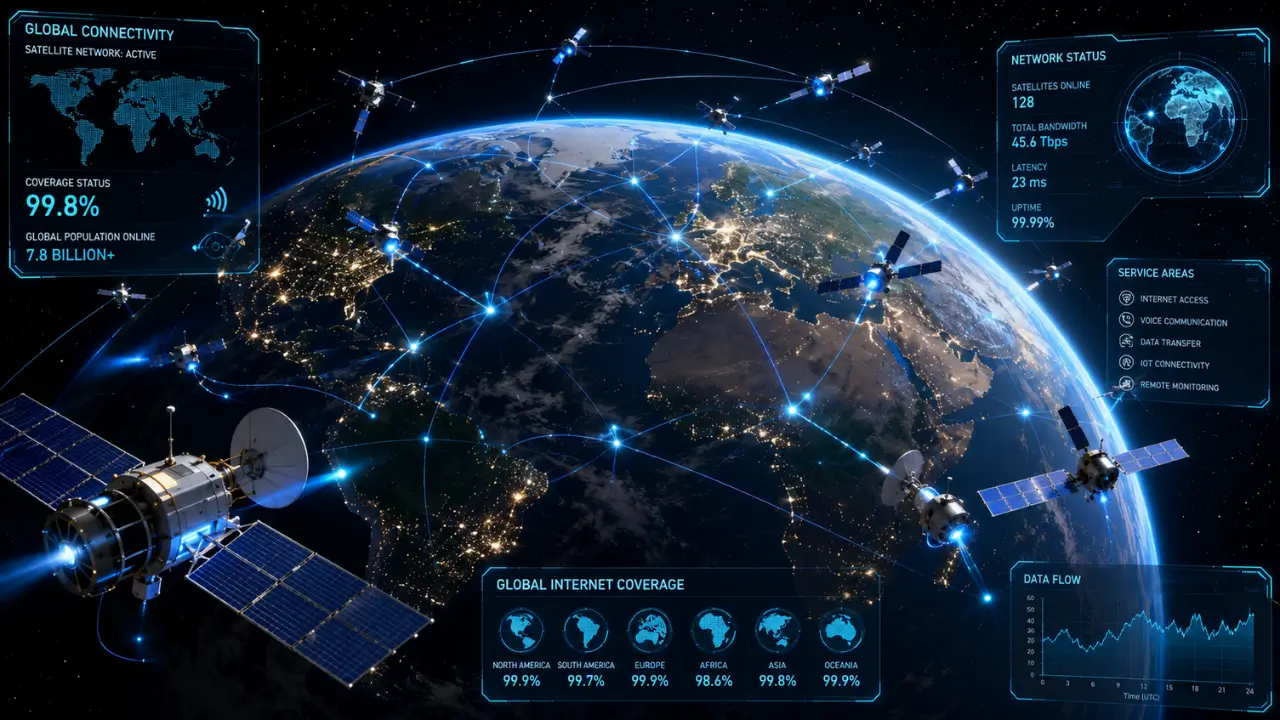
Low-Earth Orbit satellite constellations provide internet access in remote regions.
Navigation
Modern satellite systems improve:
- Aviation
- Maritime transport
- Autonomous vehicles
- Emergency services
Scientific research
Specialized satellites continuously study:
- Solar activity
- Cosmic radiation
- Earth’s atmosphere
- Space weather
5. Space Robotics
Robots are becoming indispensable partners for astronauts.
Future robotic systems will perform dangerous tasks before humans even arrive.
Robotic applications include
Space station maintenance
Robotic arms already repair and maintain orbital equipment.
Planetary exploration
Mars rovers continue exploring terrain too dangerous for humans.
Construction
Future robots may assemble:
- Lunar habitats
- Solar farms
- Communication towers
- Fuel depots
Mining
Robotic mining systems could extract valuable resources from asteroids.
6. 3D Printing in Space
Transporting materials into orbit is extremely expensive.
3D printing offers a revolutionary solution.
Instead of carrying every spare part from Earth, astronauts can manufacture components on demand.
Benefits include
- Reduced cargo weight
- Lower mission costs
- Faster repairs
- Customized equipment
- Less waste
Future lunar bases may use local soil (regolith) to print:
- Buildings
- Roads
- Landing pads
- Protective walls
This concept, known as In-Situ Resource Utilization (ISRU), could become essential for long-duration missions.
7. Space-Based Solar Power
Imagine generating electricity in space and transmitting it to Earth.
This concept has moved beyond science fiction.
Space-based solar stations could collect uninterrupted sunlight without clouds, weather, or nighttime interruptions.
Advantages include:
- Continuous power generation
- Renewable energy
- Lower carbon emissions
- Global energy distribution
Although significant engineering challenges remain, researchers continue making progress toward practical implementation.
8. Quantum Communication in Space
Cybersecurity becomes increasingly important as more spacecraft operate beyond Earth.
Quantum communication promises virtually unbreakable encryption.
Unlike traditional communication methods, quantum systems detect interception attempts immediately.
Potential applications include:
- Secure military communications
- Deep-space missions
- Satellite networks
- Financial transactions
- Government communications
Several experimental satellites have already demonstrated quantum communication technologies.
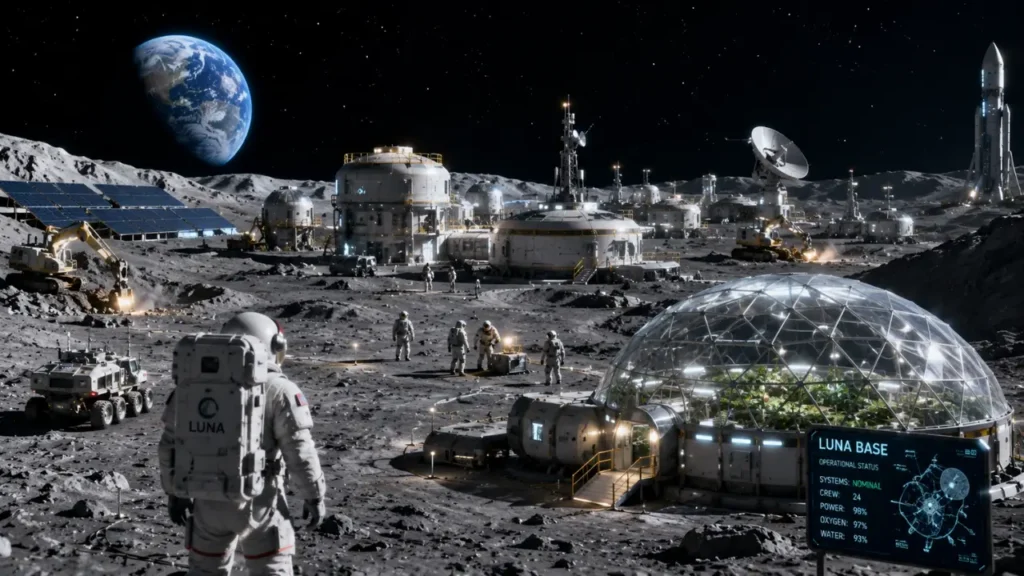
9. Space Habitats and Lunar Bases
Returning astronauts to the Moon is only the beginning.
Engineers are designing sustainable habitats capable of supporting long-term human presence.
Future lunar bases may include:
- Living quarters
- Laboratories
- Greenhouses
- Medical facilities
- Power stations
- Communication centers
Key enabling technologies
Radiation shielding
Protecting astronauts from cosmic radiation remains one of the biggest engineering challenges.
Closed-loop life support
Future systems will recycle:
- Air
- Water
- Waste
- Oxygen
Food production
Hydroponic agriculture could provide fresh vegetables during extended missions.
Local construction
Building materials derived from lunar soil reduce dependence on Earth.
10. Human Missions to Mars
Sending humans to Mars represents one of humanity’s greatest engineering challenges.
The journey requires breakthroughs in nearly every technological field.
Critical innovations include
Advanced propulsion
More efficient engines reduce travel time.
Radiation protection
Astronauts must survive prolonged exposure to cosmic radiation.
Autonomous medical systems
AI-assisted healthcare becomes essential during months-long missions.
Sustainable habitats
Martian bases must generate:
- Oxygen
- Food
- Water
- Energy
Psychological support
Virtual reality and AI companions may help astronauts manage isolation during long journeys.
The Rise of Commercial Spaceflight
Private aerospace companies have fundamentally changed the industry.
Competition has accelerated innovation while reducing launch costs.
Commercial companies now contribute to:
- Satellite deployment
- Cargo missions
- Human transportation
- Space tourism
- Lunar exploration
- Mars research
This partnership between governments and private industry is creating an entirely new space economy.
Space Tourism Is Becoming Reality
Only a few years ago, space tourism seemed impossible.
Today, private citizens have already experienced suborbital and orbital flights.
Future developments may include:
- Orbital hotels
- Lunar tourism
- Space research vacations
- Commercial space stations
While currently expensive, costs are expected to decrease as technology advances.
Advanced Propulsion Systems
Chemical rockets have limitations.
Scientists are exploring entirely new propulsion technologies.
Examples include:
Nuclear thermal propulsion
Offers significantly faster travel times.
Electric ion propulsion
Uses minimal fuel over long missions.
Solar sails
Harness sunlight for propulsion.
Plasma engines
Could dramatically reduce travel time within the solar system.
Future propulsion systems may make missions to Mars much shorter than today’s estimates.
Space Technology and Climate Monitoring
One of the most overlooked benefits of space innovation is protecting our own planet.
Modern satellites monitor:
- Melting glaciers
- Wildfires
- Hurricanes
- Floods
- Ocean currents
- Air pollution
- Carbon emissions
Governments use this information to improve disaster response and environmental conservation.
Without satellites, understanding global climate change would be far more difficult.
The Future of Space Manufacturing
Manufacturing products in microgravity offers unique advantages.
Scientists are experimenting with producing:
- Fiber optics
- Pharmaceuticals
- Semiconductors
- Biological tissues
- Advanced crystals
Some materials form more perfectly in space than on Earth because they are unaffected by gravity.
Commercial space factories may become a major industry during the next two decades.
Space Debris Management
As more satellites enter orbit, space debris has become a serious concern.
Millions of fragments travel at speeds exceeding 17,000 miles (27,000 kilometers) per hour.
Even tiny pieces can damage spacecraft.
Emerging technologies include:
- Robotic cleanup satellites
- Laser tracking systems
- Autonomous collision avoidance
- Debris capture nets
- Magnetic retrieval systems
Keeping Earth’s orbit safe is becoming an international priority.
Space Medicine Innovations
Long-duration missions require entirely new medical technologies.
Researchers are developing:
- AI diagnostic systems
- Portable imaging devices
- Remote robotic surgery
- Advanced telemedicine
- Personalized medicine
- Radiation monitoring
Interestingly, many of these medical innovations eventually improve healthcare on Earth.
Challenges Facing Future Space Technology
Despite incredible progress, several obstacles remain.
High development costs
Space missions require enormous financial investment.
Radiation exposure
Protecting astronauts during deep-space missions remains difficult.
Communication delays
Signals between Earth and Mars experience significant delays.
Energy storage
Reliable long-term power systems are still evolving.
Human health
Extended exposure to microgravity affects:
- Bones
- Muscles
- Vision
- Cardiovascular health
Addressing these challenges will define the next generation of innovation.
The Next Decade of Space Innovation
Experts predict extraordinary advances during the coming years.
Likely developments include:
- Permanent lunar research stations
- More reusable spacecraft
- AI-controlled exploration missions
- Commercial space stations
- Expanded satellite internet
- Robotic asteroid mining
- Improved nuclear propulsion
- Autonomous planetary construction
- Advanced space agriculture
- Human preparation for Mars
Each breakthrough brings humanity closer to becoming a multi-planetary civilization.
How Space Technology Benefits Everyday Life
Although much attention focuses on astronauts, the average person also benefits from space innovation.
Examples include:
- Faster internet
- Better GPS accuracy
- Improved disaster warnings
- Cleaner energy research
- Medical technologies
- Weather prediction
- Safer aviation
- Smarter agriculture
The technologies developed for exploring space often create entirely new industries back on Earth.
Frequently Asked Questions About Space Technology Innovations
What are space technology innovations?
Space technology innovations are new scientific and engineering advancements designed to improve space exploration, satellite systems, spacecraft, robotics, communications, propulsion, and human survival beyond Earth.
Why is space technology important?
Space technology supports communication, navigation, weather forecasting, scientific research, disaster monitoring, environmental protection, and future human exploration of the Moon and Mars.
How does artificial intelligence help in space?
AI assists with autonomous navigation, image analysis, spacecraft maintenance, scientific research, predictive diagnostics, and mission planning, reducing reliance on constant human control.
Will humans live on the Moon?
Many experts believe permanent lunar bases could become a reality within the next decade or two, serving as research stations and stepping stones for Mars missions.
What is the biggest recent innovation in space exploration?
Reusable rocket technology is widely considered one of the most transformative innovations because it dramatically lowers launch costs and enables more frequent space missions.
Conclusion
The pace of space technology innovations has never been faster. Advances in artificial intelligence, reusable rockets, autonomous spacecraft, quantum communication, robotics, advanced satellites, 3D printing, and sustainable habitats are transforming humanity’s relationship with space.
What once seemed like science fiction is rapidly becoming reality. Missions to Mars, permanent lunar settlements, commercial space stations, and even space tourism are no longer distant dreams—they are active projects supported by cutting-edge engineering and international collaboration.
Beyond inspiring future explorers, these innovations continue to improve life on Earth through better communications, environmental monitoring, healthcare, transportation, and scientific discovery. As technology evolves, space will become not just a destination for exploration, but an extension of human civilization itself.