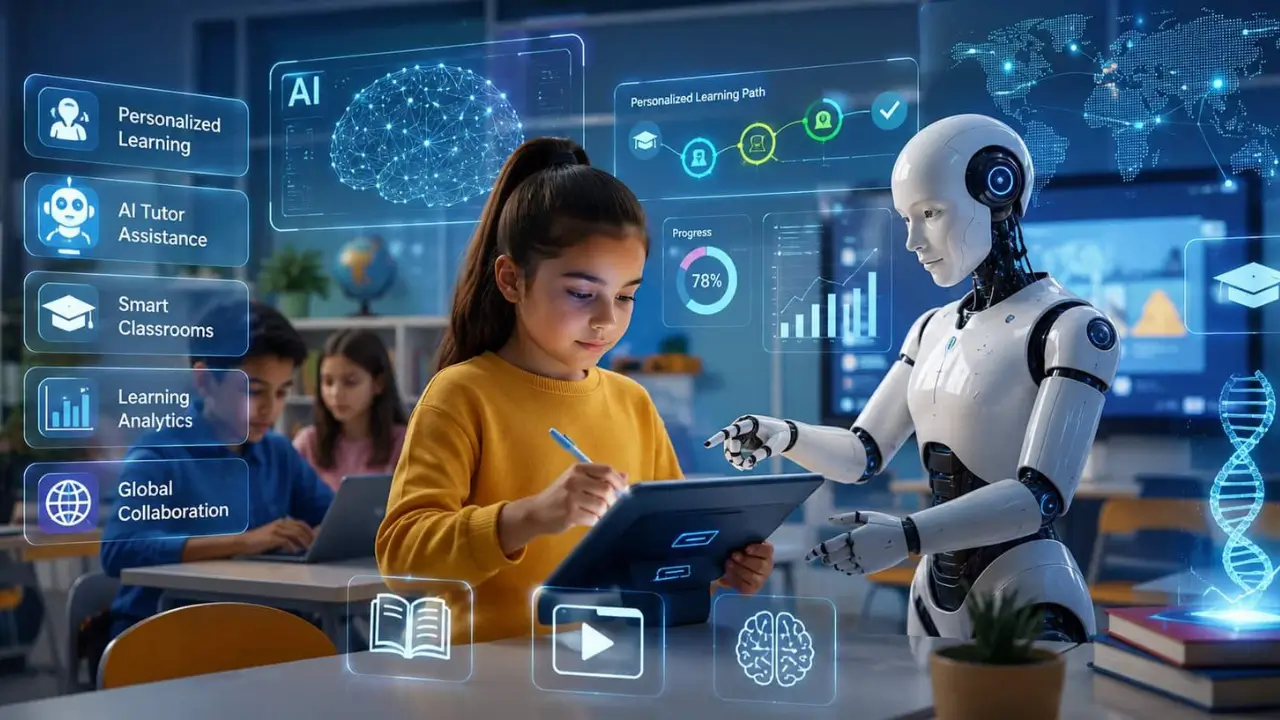
Artificial intelligence (AI) is rapidly transforming nearly every industry, and education is no exception. From personalized learning experiences to automated grading systems and intelligent tutoring platforms, AI in education is reshaping how students learn and how educators teach. As educational institutions around the world adopt innovative technologies, artificial intelligence is becoming one of the most influential forces in modern learning.
The integration of AI into classrooms, online courses, and educational administration offers unprecedented opportunities to improve learning outcomes, increase accessibility, and reduce administrative burdens. However, it also raises important questions about privacy, ethics, and the future role of teachers.
In this article, we’ll explore how AI in education is revolutionizing learning in 2026, the benefits and challenges of educational AI technologies, and what the future may hold for students, teachers, and institutions worldwide.
What Is AI in Education?
AI in education refers to the use of artificial intelligence technologies to support, enhance, and personalize the learning experience. These technologies include machine learning, natural language processing, computer vision, predictive analytics, and generative AI systems.
Educational AI systems can perform a variety of tasks, including:
- Personalizing student learning paths
- Automating grading and assessments
- Providing intelligent tutoring
- Creating educational content
- Analyzing student performance
- Supporting administrative tasks
- Enhancing accessibility for learners with disabilities
- Delivering real-time feedback
The goal of AI in education is not to replace teachers but to empower educators and create more effective learning environments.
Why AI in Education Matters More Than Ever
Education systems worldwide face numerous challenges, including teacher shortages, rising costs, unequal access to quality education, and increasing student demands. Artificial intelligence offers potential solutions to many of these problems.
Several factors are driving the rapid adoption of AI in education:
Growing Demand for Personalized Learning
Every student learns differently. Traditional classroom models often struggle to accommodate individual learning styles, speeds, and abilities. AI-powered educational platforms can adapt content and instruction to each student’s needs.
Expansion of Online Learning
The growth of online education has created opportunities for AI to provide personalized instruction, automated support, and scalable educational services.
Increased Administrative Workload
Teachers spend significant time on grading, lesson planning, and administrative tasks. AI tools can automate many of these activities, allowing educators to focus more on teaching and mentoring.
Advances in Generative AI
Recent developments in generative AI technologies have dramatically expanded the capabilities of educational tools, making intelligent assistance more accessible than ever before.
1. Personalized Learning Experiences
One of the most significant advantages of AI in education is its ability to personalize learning experiences.
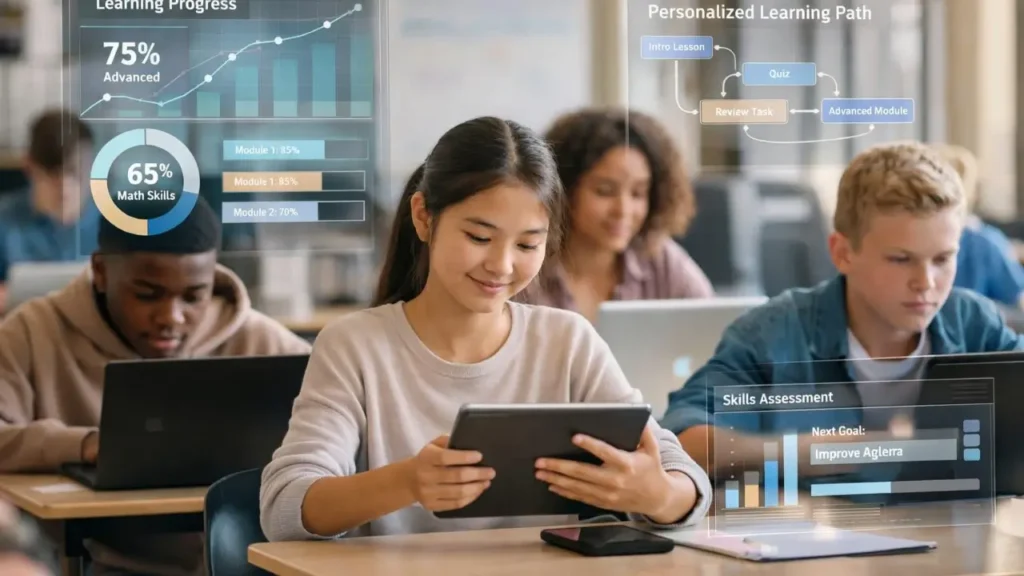
Traditional classrooms often follow a one-size-fits-all approach. Artificial intelligence changes this by analyzing student performance, learning behaviors, strengths, and weaknesses to create individualized learning paths.
How Personalized Learning Works
AI systems collect and analyze data such as:
- Quiz and test results
- Assignment completion rates
- Learning speed
- Areas of difficulty
- Student engagement levels
- Preferred learning styles
Based on this information, AI platforms can:
- Recommend customized lessons
- Adjust difficulty levels
- Provide targeted exercises
- Suggest additional resources
- Create personalized study schedules
This approach helps students learn at their own pace while improving educational outcomes.

2. Intelligent Tutoring Systems
AI-powered tutoring systems are transforming how students receive academic support.
Unlike traditional tutoring, intelligent tutoring systems can provide:
- Immediate feedback
- Personalized explanations
- Adaptive instruction
- Continuous availability
- Individualized practice exercises
These systems use machine learning algorithms to understand student progress and modify instruction accordingly.
Benefits of AI Tutors
AI tutors offer several advantages:
24/7 Availability
Students can access help whenever they need it, regardless of time or location.
Personalized Instruction
AI tutors adapt explanations based on individual student performance.
Reduced Learning Anxiety
Some students feel more comfortable asking questions to AI systems than in traditional classroom settings.
Cost Efficiency
AI tutoring can provide affordable educational support to millions of learners worldwide.
3. Automated Grading and Assessment
Grading assignments is one of the most time-consuming responsibilities for educators. Artificial intelligence is helping automate many aspects of assessment.
AI systems can now evaluate:
- Multiple-choice exams
- Essays
- Short-answer responses
- Coding assignments
- Language proficiency tests
- Mathematical problems
Advantages of AI-Based Assessment
Automated grading offers numerous benefits:
Faster Feedback
Students receive immediate results, helping them identify mistakes and improve quickly.
Reduced Teacher Workload
Educators can dedicate more time to instruction and student engagement.
Consistent Evaluation
AI systems apply the same criteria to all students, reducing grading inconsistencies.
Data-Driven Insights
Assessment platforms can identify patterns and recommend interventions for struggling students.
While AI grading is highly effective in many contexts, human oversight remains essential for complex evaluations requiring creativity and critical thinking.
4. AI-Powered Content Creation
Generative AI technologies are transforming how educational content is developed and delivered.
Teachers and institutions now use AI tools to create:
- Lesson plans
- Practice exercises
- Quizzes
- Interactive activities
- Educational videos
- Presentations
- Study guides
- Simulations
Benefits for Educators
AI-assisted content creation helps educators:
- Save preparation time
- Generate diverse learning materials
- Customize lessons for different skill levels
- Update educational content quickly
- Improve classroom engagement
This increased efficiency allows teachers to spend more time supporting students directly.
5. Virtual Learning Assistants
Virtual learning assistants are becoming increasingly common in educational environments.
These AI-powered assistants can:
- Answer student questions
- Provide reminders
- Explain concepts
- Recommend learning resources
- Track assignments
- Monitor academic progress
Students benefit from instant support without waiting for office hours or instructor availability.
Examples of Virtual Learning Applications
Virtual assistants can help students:
- Organize study schedules
- Prepare for exams
- Practice foreign languages
- Solve mathematical problems
- Conduct research
- Improve writing skills
These tools enhance independent learning and encourage student autonomy.
6. Improving Accessibility in Education
Artificial intelligence is making education more inclusive and accessible.
AI technologies support students with disabilities through features such as:
- Real-time speech-to-text conversion
- Text-to-speech tools
- Language translation
- Visual recognition systems
- Adaptive interfaces
- Automated captioning
Supporting Diverse Learners
AI can help students with:
Visual Impairments
Computer vision and voice technologies enable greater access to educational materials.
Hearing Impairments
Real-time captioning and transcription services improve communication.
Learning Disabilities
Adaptive learning platforms provide customized support and pacing.
Language Barriers
Translation technologies help students learn across different languages and cultures.
These innovations contribute to educational equity and broader access to learning opportunities.
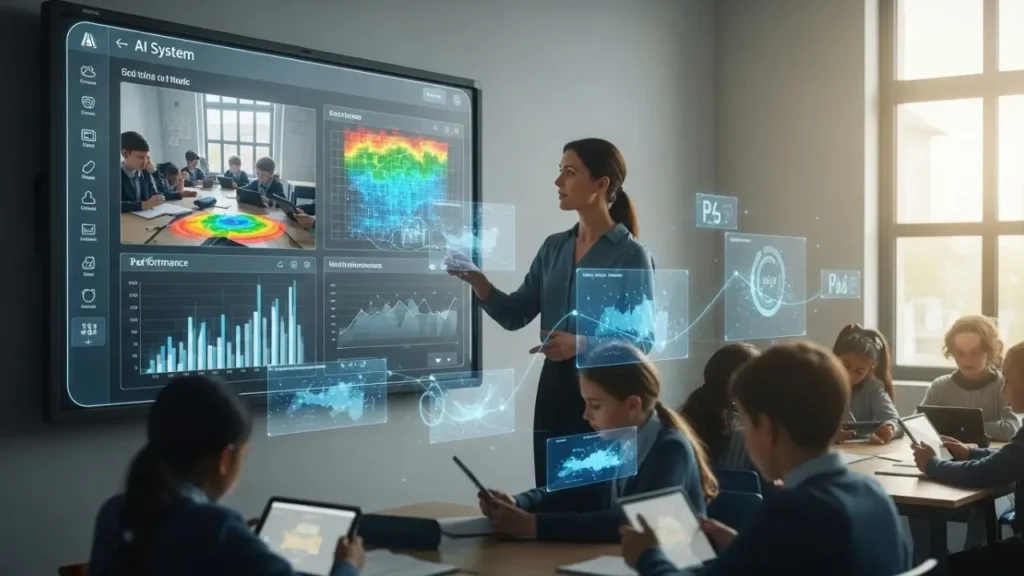
7. Predictive Analytics and Student Success
Educational institutions increasingly use predictive analytics powered by artificial intelligence to identify students who may need additional support.
AI systems analyze factors such as:
- Attendance records
- Assignment completion
- Test scores
- Participation levels
- Behavioral patterns
- Academic history
Early Intervention Benefits
Predictive analytics can help educators:
- Identify at-risk students
- Prevent dropout rates
- Improve retention
- Develop targeted support programs
- Enhance academic outcomes
Early intervention strategies enabled by AI can significantly improve student success rates.
8. Administrative Automation
Artificial intelligence is not only transforming classrooms but also educational administration.
Schools and universities use AI to automate:
- Student enrollment
- Scheduling
- Admissions processes
- Financial aid management
- Record keeping
- Resource allocation
- Communication systems
Benefits for Educational Institutions
Administrative AI helps institutions:
- Reduce operational costs
- Improve efficiency
- Minimize errors
- Enhance student services
- Streamline workflows
This allows administrators to focus more on strategic planning and student support.

9. Immersive Learning Through AI and Emerging Technologies
Artificial intelligence is increasingly integrated with other emerging technologies, creating immersive educational experiences.
These technologies include:
- Virtual reality (VR)
- Augmented reality (AR)
- Mixed reality (MR)
- Digital twins
- Educational simulations
Examples of Immersive Learning
Students can:
- Explore historical events through virtual environments
- Conduct scientific experiments safely
- Practice medical procedures virtually
- Learn engineering concepts interactively
- Experience foreign cultures through simulations
Immersive learning improves engagement, knowledge retention, and practical understanding.
The Benefits of AI in Education
The rapid growth of educational AI offers numerous advantages.
Improved Learning Outcomes
Personalized instruction helps students learn more effectively and retain information longer.
Greater Educational Access
AI enables remote learning and expands access to educational resources globally.
Enhanced Teacher Productivity
Automation reduces administrative burdens and allows teachers to focus on instruction.
Cost Efficiency
Scalable AI solutions can reduce educational expenses over time.
Better Student Engagement
Interactive and adaptive technologies create more engaging learning experiences.
Lifelong Learning Opportunities
AI supports continuous education and professional development throughout life.
Challenges and Concerns About AI in Education
Despite its benefits, artificial intelligence in education also presents significant challenges.
Data Privacy and Security
Educational AI systems collect large amounts of student data, raising concerns about privacy and cybersecurity.
Algorithmic Bias
AI models may unintentionally reinforce existing inequalities if trained on biased data.
Overdependence on Technology
Excessive reliance on AI could reduce critical thinking and interpersonal learning skills.
Digital Divide
Not all students have equal access to AI technologies and internet connectivity.
Ethical Considerations
Questions remain regarding transparency, accountability, and responsible AI use.
Teacher Displacement Fears
Although AI is unlikely to replace teachers entirely, concerns about job disruption persist.
Addressing these challenges requires thoughtful policies, ethical guidelines, and human oversight.
Will AI Replace Teachers?
One of the most common questions about AI in education is whether artificial intelligence will replace teachers.
The answer is likely no.
While AI can automate many tasks and provide personalized support, teaching involves uniquely human abilities such as:
- Empathy
- Emotional intelligence
- Creativity
- Motivation
- Mentorship
- Social interaction
- Ethical guidance
Instead of replacing educators, AI will likely transform their role.
Teachers of the future may spend less time on administrative work and more time:
- Coaching students
- Facilitating discussions
- Encouraging critical thinking
- Supporting emotional development
- Designing learning experiences
Human educators will remain central to effective education systems.
The Future of AI in Education
The future of AI in education appears exceptionally promising.
Experts predict that future educational systems may include:
- Fully personalized curricula
- AI learning companions
- Intelligent virtual classrooms
- Emotion-aware educational systems
- Real-time language translation
- Adaptive examinations
- AI-powered career guidance
- Lifelong learning assistants
As artificial intelligence technologies continue advancing, education may become more personalized, accessible, efficient, and effective than ever before.
However, successful implementation will require balancing innovation with ethics, privacy, and human-centered educational values.
Conclusion
Artificial intelligence is fundamentally transforming education in 2026. From personalized learning and intelligent tutoring to administrative automation and immersive educational experiences, AI technologies are reshaping how knowledge is delivered and acquired.
The benefits of AI in education are substantial: improved learning outcomes, greater accessibility, enhanced efficiency, and more personalized instruction. At the same time, educators, policymakers, and technology developers must carefully address concerns related to privacy, bias, ethics, and equitable access.
The future of education will not be defined by humans versus artificial intelligence. Instead, it will be shaped by how humans and AI work together to create richer, more inclusive, and more effective learning experiences for everyone.
As artificial intelligence continues to evolve, one thing is clear: the classroom of the future has already begun to emerge.
Want to learn more about how artificial intelligence is transforming everyday life? Explore our text about” AI Explained for Beginners” /https://growthpoweredai.com/2026/06/15/agi-explained-for-beginners/