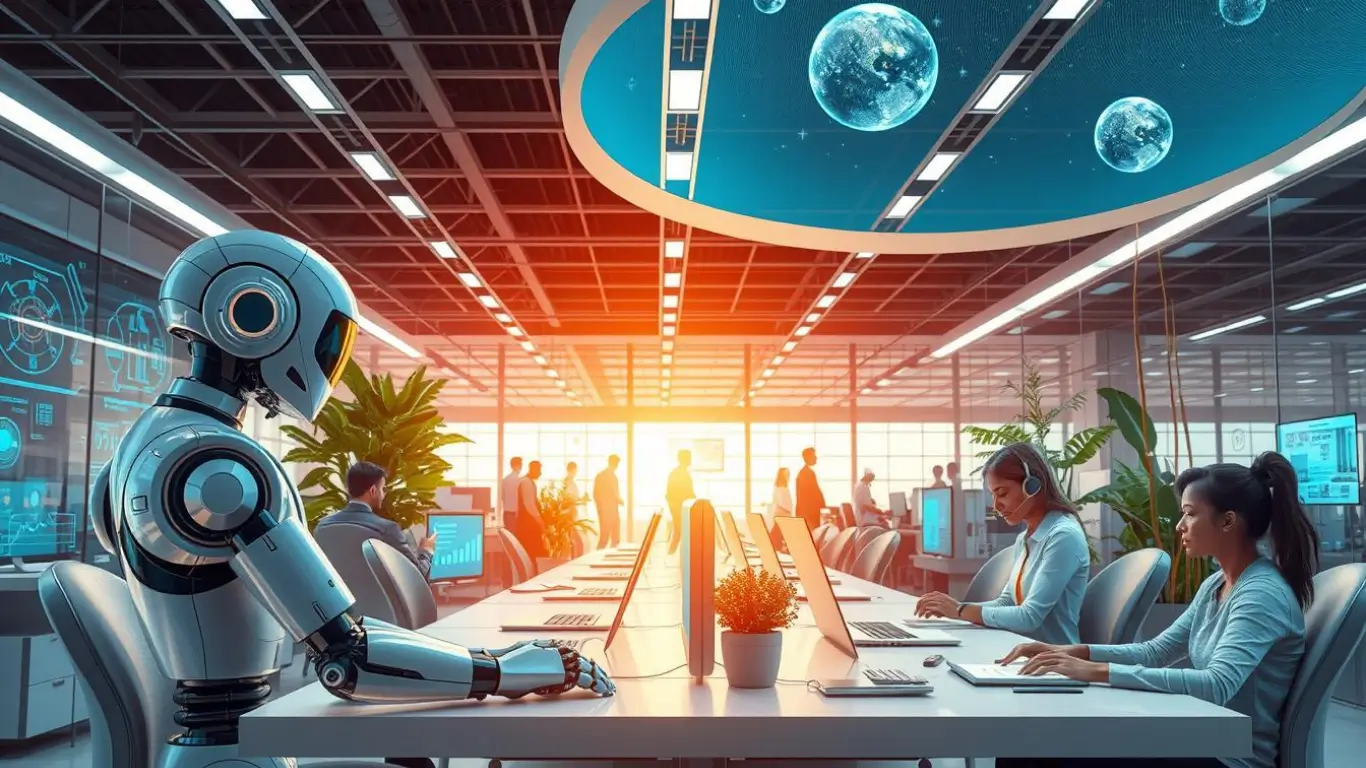
Automation tools has become one of the most transformative forces in modern technology. What was once limited to basic software scripts and simple task scheduling has evolved into a sophisticated ecosystem powered by artificial intelligence (AI), machine learning, cloud computing, and advanced data analytics. Businesses across every industry are now leveraging automation tools to improve efficiency, reduce operational costs, and deliver better experiences to customers.
The global shift toward digital transformation has accelerated the adoption of automation technologies. Organizations are under constant pressure to do more with fewer resources, respond quickly to changing market conditions, and meet growing customer expectations. Automation tools have emerged as a powerful solution, enabling businesses to streamline workflows, eliminate repetitive tasks, and focus on strategic growth.
However, the future of automation is about much more than saving time. Over the next five years, automation tools will become increasingly intelligent, autonomous, and integrated into nearly every aspect of business operations and daily life. Emerging technologies will allow systems not only to execute tasks but also to make decisions, learn from data, predict outcomes, and collaborate with humans in meaningful ways.
From hyperautomation and AI agents to predictive analytics and smart cities, the future promises a new generation of automation technologies that will reshape industries worldwide. Businesses that understand these trends today will be better prepared to thrive in tomorrow’s digital economy.
In this article, we explore the most important automation trends expected to dominate the next five years and examine how they will transform the way we work, communicate, and innovate.
Why Automation Is Becoming More Important Than Ever
Modern businesses operate in an increasingly competitive environment where speed, accuracy, and efficiency are critical to success. Organizations must manage vast amounts of data, coordinate complex workflows, and deliver personalized experiences to customers while controlling costs.
Automation helps solve these challenges by:
- Eliminating repetitive manual tasks
- Improving workflow efficiency
- Reducing human errors
- Accelerating business processes
- Enhancing customer experiences
- Increasing scalability
- Supporting data-driven decision-making
As AI technology continues to advance, automation tools are evolving from simple rule-based systems into intelligent platforms capable of adapting to changing circumstances and learning from experience.
This shift is creating opportunities for businesses to become more agile, innovative, and competitive than ever before.
1. Hyperautomation Will Transform Entire Business Operations
One of the most significant trends shaping the future is hyperautomation.
Hyperautomation goes beyond automating individual tasks. Instead, it focuses on automating complete business processes by combining multiple technologies such as artificial intelligence, robotic process automation (RPA), machine learning, process mining, and workflow orchestration.
For example, imagine a customer submitting an online support request. A hyperautomation platform could automatically:
- Receive the request
- Analyze the customer’s issue
- Determine its priority
- Assign it to the correct department
- Generate a response
- Track resolution progress
- Update customer records
All of these actions could occur with minimal human intervention.
Over the next five years, hyperautomation will become a cornerstone of digital transformation initiatives. Organizations that implement end-to-end automation strategies will gain substantial advantages in productivity, efficiency, and customer satisfaction.

2. AI Agents Will Become Digital Coworkers
One of the most exciting developments in automation is the emergence of AI agents.
Unlike traditional automation systems that follow predefined instructions, AI agents can:
- Understand objectives
- Plan tasks
- Analyze information
- Make decisions
- Adapt to new situations
- Execute multi-step workflows
These intelligent systems are expected to become increasingly capable and autonomous in the coming years.
Businesses may deploy AI agents to handle:
- Administrative work
- Research tasks
- Customer support
- Scheduling
- Data analysis
- Project coordination
Rather than replacing employees, AI agents will act as digital coworkers that support human teams and improve productivity.
The concept of having an AI assistant working alongside employees may soon become as common as using email or cloud software today.
3. Predictive Automation Will Enable Proactive Decision-Making
Most current automation systems react to predefined triggers. Future automation tools will become far more proactive.
Predictive automation uses machine learning algorithms to analyze historical and real-time data to forecast future events.
Businesses will increasingly use predictive automation to:
- Forecast customer demand
- Predict equipment failures
- Optimize inventory management
- Anticipate market trends
- Detect cybersecurity threats
- Improve financial planning
Instead of responding to problems after they occur, organizations will be able to prevent issues before they impact operations.
This shift from reactive to proactive management will significantly improve efficiency and reduce operational risks.
4. No-Code and Low-Code Automation Will Democratize Innovation
Traditionally, building automated systems required programming knowledge and specialized technical expertise.
No-code and low-code platforms are changing that reality.
These platforms allow users to create workflows, applications, and integrations through visual drag-and-drop interfaces.
In the next five years, no-code automation tools will become even more powerful, enabling non-technical users to:
- Build business applications
- Create AI-powered workflows
- Automate repetitive tasks
- Integrate software platforms
- Develop custom solutions
This democratization of automation will empower employees throughout organizations to innovate independently without relying heavily on IT departments.
As a result, businesses will be able to adapt more quickly to changing market conditions and customer needs.
5. Intelligent Customer Service Automation Will Redefine Support
Customer service is undergoing a major transformation thanks to advances in AI-powered automation.
Future customer service systems will be capable of:
- Understanding natural language
- Detecting customer sentiment
- Providing personalized responses
- Resolving complex issues
- Maintaining context across conversations
Unlike early chatbots that often frustrated users with limited capabilities, next-generation AI assistants will offer more natural and human-like interactions.
Businesses will benefit from:
- Faster response times
- Lower support costs
- Increased customer satisfaction
- Improved scalability
- 24/7 availability
As these systems become more sophisticated, many routine customer interactions will be handled entirely through intelligent automation.
6. Automation and Cybersecurity Will Work Hand in Hand
Cybersecurity threats continue to increase in both frequency and sophistication.
To address these challenges, organizations are turning to automated security solutions.
Future cybersecurity automation tools will:
- Continuously monitor networks
- Identify suspicious behavior
- Detect vulnerabilities
- Respond to incidents in real time
- Generate security reports automatically
AI-powered systems can analyze enormous amounts of data much faster than human analysts.
This capability allows businesses to identify potential threats before they cause significant damage.
As cyberattacks become increasingly complex, automation will become a critical component of effective cybersecurity strategies.

7. Human-AI Collaboration Will Become the New Workplace Model
Many people fear that automation will eliminate jobs entirely. While automation will undoubtedly change the nature of work, experts increasingly believe that the future will involve collaboration between humans and intelligent machines.
Automation excels at:
- Data processing
- Pattern recognition
- Repetitive tasks
- Information retrieval
- Routine decision-making
Humans excel at:
- Creativity
- Leadership
- Emotional intelligence
- Strategic planning
- Innovation
The most successful organizations will combine these strengths to create highly productive teams.
Employees will spend less time on repetitive administrative work and more time focusing on activities that require critical thinking, creativity, and interpersonal skills.
This human-AI partnership will define the workplace of the future.
8. Industry-Specific Automation Solutions Will Expand Rapidly
While general automation platforms remain valuable, industry-specific solutions are expected to experience significant growth.
Healthcare
Automation tools will assist with:
- Patient scheduling
- Medical documentation
- Diagnostics support
- Treatment planning
- Remote patient monitoring
Finance
Financial institutions will use automation for:
- Fraud detection
- Risk management
- Compliance monitoring
- Investment analysis
- Customer onboarding
Manufacturing
Manufacturers will benefit from:
- Predictive maintenance
- Quality assurance
- Production optimization
- Supply chain management
Retail
Retailers will leverage automation to improve:
- Inventory forecasting
- Personalized marketing
- Customer engagement
- Order fulfillment
Industry-specific automation tools provide tailored solutions that address unique operational challenges.
9. Smart Homes and Smart Cities Will Become More Intelligent
Automation is extending far beyond the workplace.
Over the next five years, smart homes will become increasingly capable of managing daily activities automatically.
Examples include:
- AI-powered virtual assistants
- Intelligent energy management systems
- Automated security monitoring
- Predictive appliance maintenance
- Personalized environmental controls
At the same time, cities worldwide are investing in automation technologies to improve public services.
Smart city initiatives may include:
- Traffic optimization systems
- Automated waste management
- Intelligent energy grids
- Public transportation coordination
- Emergency response automation
These innovations have the potential to improve quality of life while promoting sustainability and efficiency.
10. Ethical Automation and Responsible AI Will Gain Importance
As automation technologies become more powerful, ethical considerations will play a larger role in their development and deployment.
Businesses and governments are increasingly concerned about:
- Data privacy
- Transparency
- Accountability
- Algorithmic bias
- Workforce impact
Organizations will need to ensure that automated systems operate fairly, securely, and responsibly.
Consumers are becoming more aware of how their data is collected and used, making trust an essential component of future automation strategies.
Companies that prioritize ethical AI practices will likely enjoy stronger customer relationships and greater long-term success.
Additional Emerging Trends to Watch
Beyond the major trends discussed above, several other developments are expected to influence the future of automation.
Voice-Based Automation
Voice interfaces will become more sophisticated, allowing users to manage workflows and systems through natural conversations.
Autonomous Vehicles
Automation technologies will continue advancing self-driving cars, delivery robots, and transportation networks.
Digital Twins
Businesses will use digital replicas of physical systems to simulate operations and optimize performance.
Sustainable Automation
Organizations will increasingly use automation to reduce waste, improve energy efficiency, and support environmental goals.
Edge Computing Integration
Automation systems will process data closer to where it is generated, enabling faster responses and reduced latency.
These emerging technologies will further expand the capabilities and impact of automation across industries.
Challenges Facing the Future of Automation
Despite its many benefits, automation presents several challenges.
Workforce Reskilling
Employees will need ongoing education and training to adapt to changing technologies.
Data Quality Issues
Automation systems rely on accurate and reliable data to function effectively.
Security Concerns
Automated systems can create new vulnerabilities if not properly protected.
Regulatory Compliance
Governments around the world are developing regulations related to AI and automation.
Businesses must remain informed and adaptable as legal frameworks evolve.
Successfully addressing these challenges will be essential for maximizing the benefits of automation.
Conclusion
The future of automation tools is brighter than ever. Over the next five years, advancements in artificial intelligence, machine learning, predictive analytics, and intelligent workflow management will transform how organizations operate and compete.
Hyperautomation, AI agents, predictive decision-making, no-code development, intelligent customer service, cybersecurity automation, and human-AI collaboration are just some of the trends poised to reshape industries worldwide.
Businesses that embrace these innovations will improve efficiency, reduce costs, enhance customer experiences, and unlock new opportunities for growth. Those that delay adoption may find it increasingly difficult to keep pace in a rapidly evolving digital landscape.
Automation is no longer simply about replacing repetitive tasks. It is becoming a strategic tool that drives innovation, supports smarter decision-making, and empowers organizations to achieve new levels of performance.
As technology continues to evolve, automation will play a central role in shaping the future of business, society, and everyday life. The organizations that prepare today will be the leaders of tomorrow’s automated world.
Interested in discovering how artificial intelligence is transforming the world? Check out our latest articles on Artificial Intelligence Innovations to stay ahead of the technologies shaping tomorrow..https://growthpoweredai.com/2026/05/30/artificial-intelligence-